
How to Trim Cat Nails at Home (Without the Wrestling Match)
By the MCC team · 9 min read · Updated November 2026
Most cats do not hate having their nails trimmed. They hate being restrained, surprised, and having a paw squeezed for too long. Fix those three things and how to trim cat nails becomes a two-minute routine rather than a wrestling match. This guide covers the anatomy you need to know (where the quick is and how to see it), the exact hold and angle, a desensitisation plan for cats who bolt, and what to do if you cut too far. It is written for a single person trimming at home — no helper required.
Why trim at all (and how often)
Scratching sheds the outer nail sheath but does not shorten the nail. Untrimmed claws curl, snag carpet and skin, and in older or less active cats can grow into the paw pad. Trim every 2–3 weeks for indoor adults, every 1–2 weeks for seniors (their nails thicken and curl faster), and from about 8 weeks for kittens so they grow up used to it. You only ever remove the sharp hook at the tip; this is maintenance, not surgery.
Know the quick before you pick up the clippers
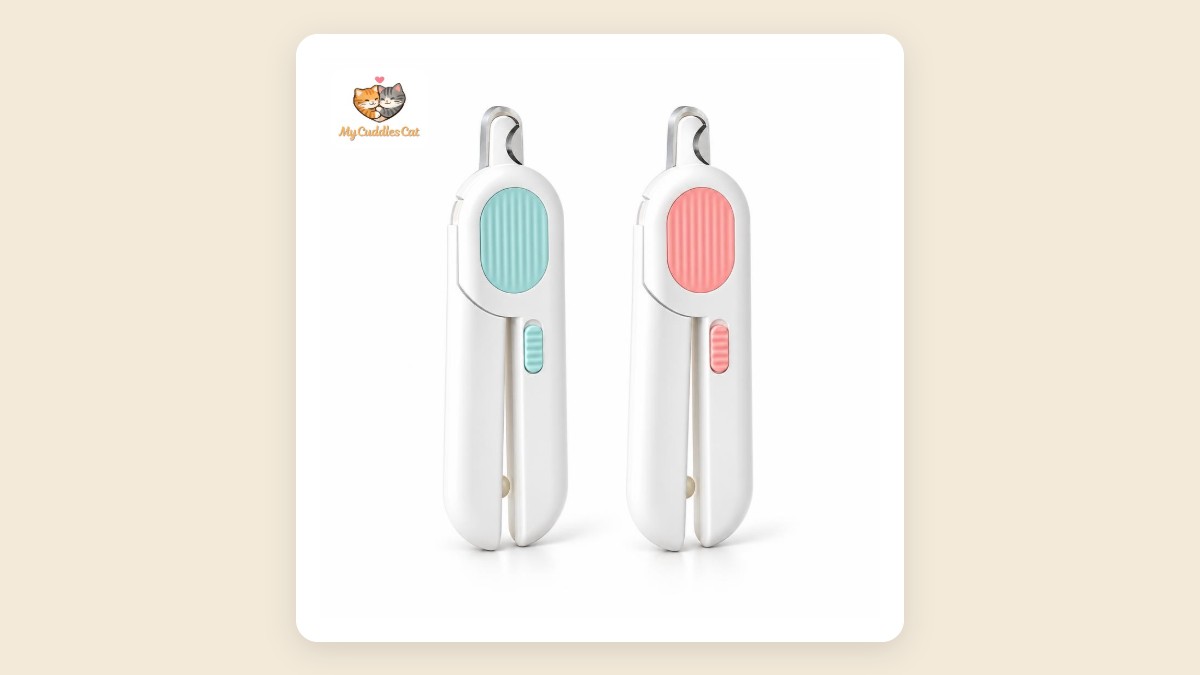
The quick is the pink core of blood vessels and nerve inside the nail. Cutting into it hurts and bleeds. In light-coloured claws it is easy to see against a window; in dark or thick claws it is not, and that is where most accidents happen. Two tools make it visible: holding the paw up to a bright light, or using clippers with a built-in LED behind the blade. Our Bright-Trim LED Cat Nail Clippers shine through the nail so the quick shows as a shadow, which is the single biggest confidence boost for a nervous owner. Whatever you use, your target is 2 mm in front of the quick — just the clear, hooked tip.

What you need
- Cat-specific clippers — scissor-style or guillotine. Human clippers crush the nail sideways and can split it. Look for a stainless blade, a comfortable 5–6 inch handle and ideally an LED.
- Styptic powder (or cornstarch in a pinch) within arm’s reach, every time.
- A towel for the “burrito” hold if your cat squirms.
- Treats the cat only gets at trim time — lickable tubes work best because they occupy the mouth for the whole session.
- A nail file to smooth edges; some clippers build one into the handle.
How to trim cat nails step by step
- Pick a sleepy moment. After a meal or a play session, when the cat is relaxed on your lap or a stable surface. Never chase a cat to trim.
- Sit the cat facing away from you, back against your stomach, so they feel held rather than confronted. Small cats can lie in the crook of one arm.
- Extend one claw. Hold the paw gently and press the top of a toe with your thumb while supporting the pad underneath with your index finger. The claw slides out.
- Find the quick against the light or with the LED. Identify the 2 mm safety margin.
- Cut from top to bottom, not side to side. Position the blade perpendicular to the nail’s flat sides and snip in one firm motion. Cutting side-to-side splinters the nail.
- One or two claws, then release and reward. Especially for the first few sessions. Finishing all 18 claws in one go is a goal for week three, not day one.
- Do not forget the dewclaws — the “thumb” nails on the inside of each front leg. They never touch the ground, so they curl fastest.
- File any rough edge with two light strokes, then end on a treat while the cat is still calm.
How to trim cat nails by yourself (no helper)
Solo trimming works when you remove the need for a second pair of hands. Three techniques:
- The lap hold: cat on your lap facing away, your non-dominant forearm resting lightly across their chest, that hand holding the paw. Your dominant hand clips.
- The lickable-treat distraction: smear a lickable treat on a plate or a silicone mat stuck to the counter at the cat’s head height. Most cats will lick for 60–90 seconds, which is enough for one or two paws.
- The towel burrito: wrap the cat snugly in a towel with one paw out at a time. Use it only for cats who otherwise claw you; keep sessions under two minutes.
How to trim an aggressive or terrified cat’s nails: the two-week plan
If your cat bolts at the sight of clippers, go backwards before you go forwards. Each step below is one to three days; move on only when the cat stays relaxed.
- Leave the clippers on the floor near the food bowl. Touch nothing.
- Touch a paw for one second during a cuddle, then treat. Repeat with every paw over several days.
- Hold a paw and press a toe so a claw extends; treat; release.
- Tap a claw with the closed clippers; treat.
- Cut one claw. Treat lavishly. Stop for the day.
- Add one claw per session until you reach a full paw, then two paws.
Pairing every trim with a treat the cat gets at no other time builds a positive association within two to three weeks for most cats. If a cat panics to the point of panting or open-mouth breathing, stop; a vet or groomer can trim while you continue the desensitisation at home.
If you cut the quick
It looks dramatic and resolves quickly. Press styptic powder (or cornstarch) firmly onto the nail tip for 30 seconds; bleeding normally stops within a minute or two. Keep the cat off dusty litter for a few hours — a few sheets of paper over the litter works. See a vet only if bleeding continues past ten minutes or the toe swells over the next day. Then, importantly, do not end the session on the mishap: give a treat, wait a minute, and trim one easy claw so the last memory is neutral.
Mistakes that make trimming harder
- Trimming when the cat is already wound up (after the vacuum, at dinner time).
- Squeezing the paw hard instead of pressing one toe.
- Cutting too much at once to “make it last” — small, frequent trims keep the quick short and the cat calm.
- Using dull or human clippers that crush rather than cut.
- Scolding. Cats do not connect it to the behaviour; they connect it to you and the clippers.
Trimming is half the job — give them something to scratch
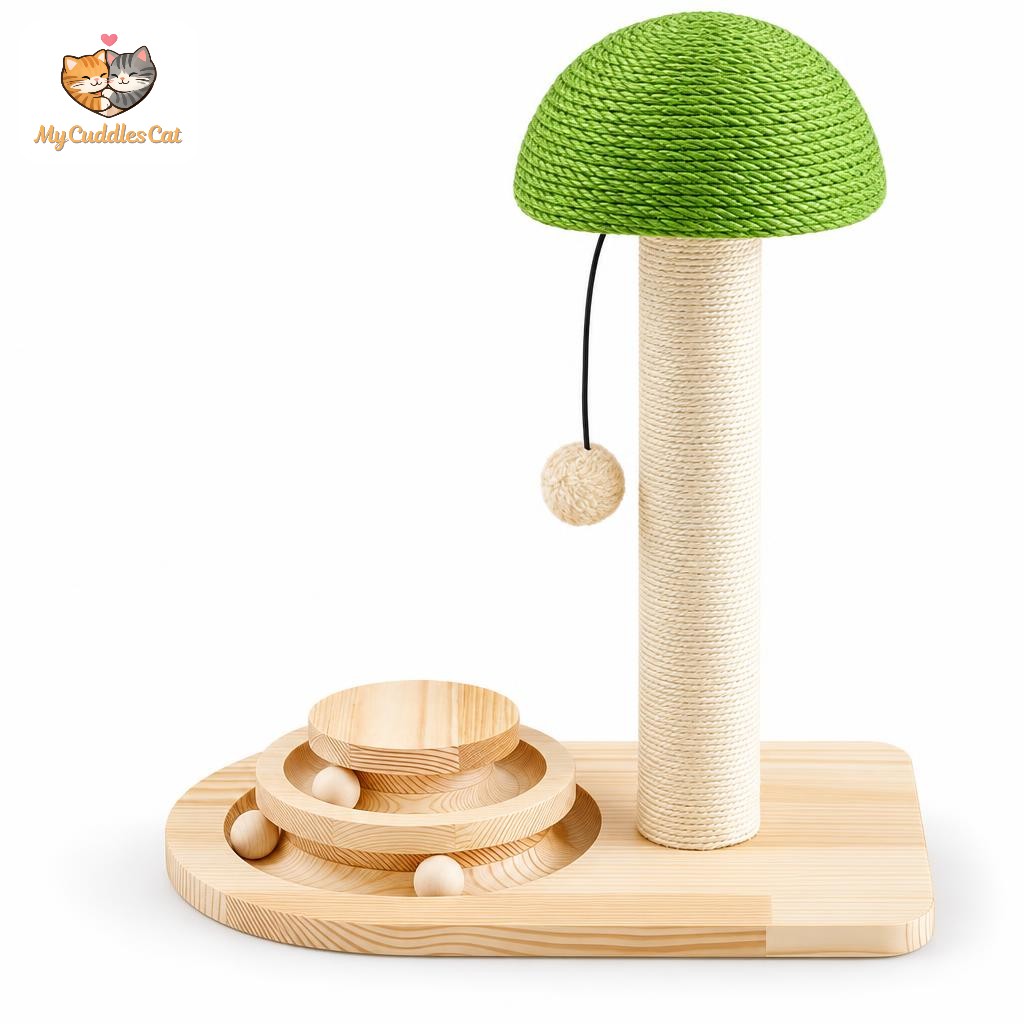
Trimmed claws still need to shed their sheaths, and a cat with no acceptable scratching surface will use the sofa. A tall sisal post near where the cat sleeps — our Mushroom Scratch Post or the posts on the Modern Cat Tower — keeps claws healthy between trims. The full placement strategy is in How to stop a cat scratching furniture.
Kitten nails: start at 8 weeks, keep it tiny
Kitten claws are needle-thin with a short quick, so the risk of cutting too far is low — the goal at this age is habit, not length. Handle paws daily during play, press a toe to extend a claw and let the kitten sniff the clippers. Clip just the translucent hook from one or two claws every few days rather than a full set once a fortnight. A kitten that is trimmed every week from eight weeks old will usually sit through a complete trim as an adult without any restraint at all. Keep sessions under a minute and end with a game.
Senior cats: thick, brittle and overgrown claws
Older cats scratch less, so sheaths build up and claws thicken, curl and sometimes grow into the pad. Trim every one to two weeks, use sharp clippers (thick nails crush under dull blades), and take off less per cut — the quick in a senior nail is often longer than it looks. Check the pads for redness or a claw tip pressing into skin; an ingrown claw needs a vet, not a home trim. Arthritic cats may object to having a leg lifted, so trim with the paw resting on a cushion and the leg in its natural position. A warm, soft bed nearby helps too; see our cat bed guide for seniors.
Nail day is also a good moment for a quick coat check: a few strokes with a cat grooming glove lift loose fur while your cat is already calm, and a cat hair remover clears whatever lands on the sofa afterwards.
Frequently asked questions
How often should I trim my cat’s nails?
Every 2–3 weeks for most indoor adults, every 1–2 weeks for seniors, and little-and-often from 8 weeks old for kittens.
Can I use human nail clippers on a cat?
It is not recommended: they compress the nail from the sides and can split it. Cat clippers cut cleanly across the nail’s round profile.
How do I trim black cat nails where I can’t see the quick?
Use a strong backlight or LED clippers to reveal the quick’s shadow, and take off only the thin hooked tip — about 1–2 mm — in small cuts.
Do indoor cats need their nails trimmed?
Yes — indoor cats wear their nails down less than outdoor cats, so they are more prone to curling and snagging, not less.
Should I trim the back claws too?
Usually less often. Back claws are shorter and wear faster; trim them every 4–6 weeks or when they start catching fabric.
Related: Stop your cat scratching furniture · New kitten checklist · Keep cat gear clean · Shop grooming and health.