
How to choose a cat bed your cat will actually use
By the MCC team · 6 min read · Reviewed for accuracy
The best cat bed is the one your cat actually sleeps in. Every cat owner has done it: bought a perfectly nice bed, set it down with high hopes, and watched the cat sleep in the cardboard box it came in. Here’s how to pick a bed that actually earns its spot.
1. Match the bed to how your cat sleeps
Watch your cat for a day. Cats that curl into tight balls or seek out enclosed spaces want a cave or covered bed — the enclosure satisfies a hardwired instinct to hide. Cats that sprawl out in the open prefer a flat lounger or bolster bed. Buying against your cat’s natural style is the number-one reason beds get ignored.
2. Get the size right (most people size up too much)
Cats like to feel snug, not lost. A bed that’s slightly larger than your curled-up cat is ideal — cavernous beds feel exposed. As a rule: most cats up to 12 lb fit a standard size; big breeds like Maine Coons and Ragdolls should size up.
3. Prioritize washability
A bed your cat loves is a bed that gets dirty. A removable, machine-washable cushion isn’t a luxury — it’s the difference between a bed that lasts a year and one you toss in a month.
4. Place it where your cat already feels safe
The best bed in the wrong spot still loses to the windowsill. Put it somewhere warm, slightly elevated, and near where your cat already likes to be. Then give it a week — cats are suspicious of new things, and adoption often takes a few days.
5. Quality you can feel
Look for a structured shape that holds up (no collapsing domes), a non-slip base, and pet-safe materials. Certifications like OEKO-TEX are a good sign the textiles are non-toxic.
Beds for large cats and two-cat homes
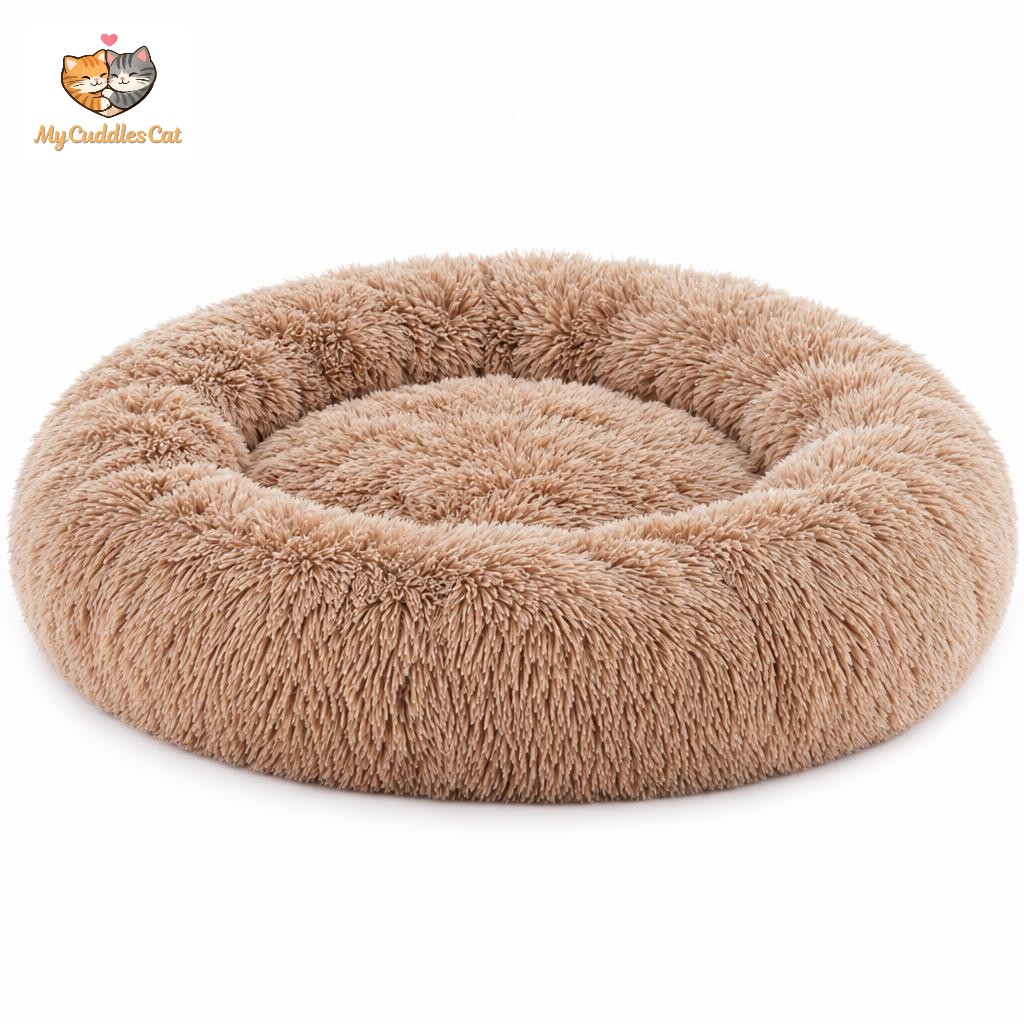
A cat bed for large cats is mostly a question of inside diameter: a Maine Coon mix curled up is 20 in or more across, so a 24 in bed is cramped. Go to a 30 in bed for one big cat (the Marshmallow Cloud Bed’s Large is 30.7 in) and 37 in if two cats sleep together — they will share a bed exactly as long as neither has to touch the rim. For a fluffy cat bed that stays fluffy, the rule in point 3 applies double: long-pile plush mats fast unless the whole bed can be washed.
Getting a cat to use a new bed
- Rub a worn T-shirt or a pinch of catnip into the plush so it smells like home.
- Place it on the exact spot they currently sleep for the first week, then move it a few inches a day if you need it elsewhere.
- Do not put the cat in the bed; cats reject places they were put. Let them find it.
- Wash it before it looks dirty — fur mats faster than it shows — and the bed stays the soft one.
When the answer is not a bed at all
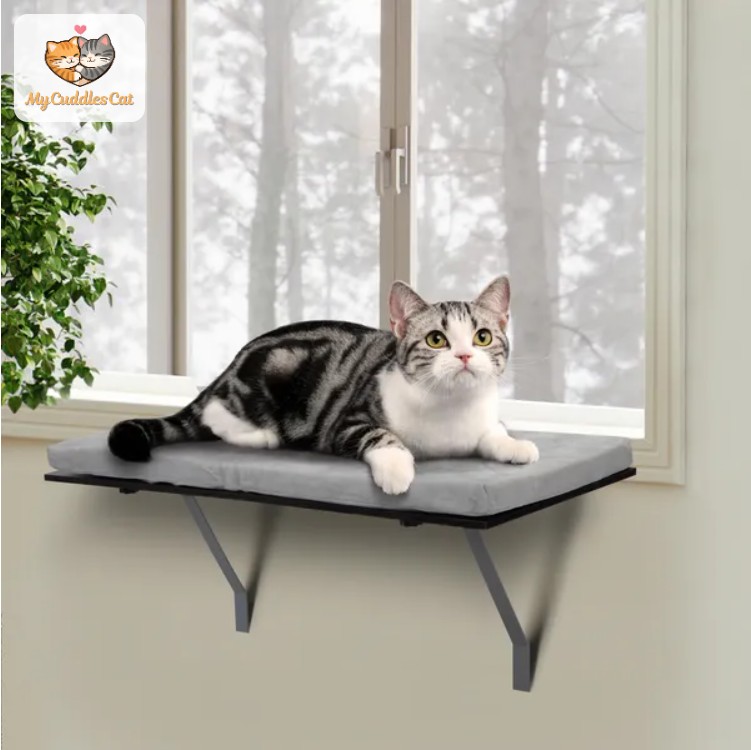
Lookout cats — the ones on the back of the sofa or the windowsill — are choosing height, not softness, and no floor bed will compete. Give them the height instead: a sill-mounted cat window perch with a washable cushion, or the top platform of a cat tower, gets more use than a second bed. Heat seekers get the same answer from insulation; see how self-warming cat beds work.
Cat bed types compared
Every bed on the market is a variation on five shapes. Match the shape to the sleeping style you identified above, then choose the size and material.
| Type | Best for | Watch out for | Typical size |
|---|---|---|---|
| Donut / bolster bed | Curlers, anxious cats, cold rooms | Rim too high for seniors to step over | 18–24 in across |
| Cave / hooded bed | Hiders, multi-pet homes, kittens | Overheats in summer; some cats refuse enclosed spaces | Opening 7–9 in |
| Flat mat or cushion | Sprawlers, hot climates, large cats | No edge to lean on; slides on hard floors | 20–28 in long |
| Elevated / hammock | Warm homes, cats who like airflow | Needs a stable frame; not for jumpers landing hard | Frame 20–24 in |
| Window perch | Sun-seekers, apartment cats | Weight limit; sill depth | Sill-mounted, 12–18 in deep |
Materials and fill: what actually lasts
A bed fails in one of two ways: the fill flattens, or the cover pills and holds smell. For fill, look for high-loft polyester fibre (springs back after washing) or memory-foam inserts for seniors with joint stiffness; avoid loose polystyrene beads, which clump and cannot be washed. For covers, faux shearling and plush win in winter but trap fur; woven cotton or linen-look fabric stays cooler and sheds fur with a lint roller. Whatever you choose, insist on a removable, zip-off cover or a fully machine-washable bed — a bed you cannot wash is a bed you will throw away in six months. Our Marshmallow Cloud Bed is the whole-bed-in-the-washer kind, in Large and XL.
Beds for kittens and senior cats
Kittens run warm, sleep hard and grow fast: a small donut or cave now, sized up at six months, is cheaper than one adult bed that swamps them. Place it inside their first-week “safe room” (see our new kitten checklist). Seniors need the opposite: a low entry (rim under 4 in), firm support so they can push up to stand, warmth, and a position they can reach without jumping. A bolster bed on the floor beside the sofa beats a cave on top of it. If an older cat suddenly stops using a favourite bed, check the entry height before assuming they have gone off it.
Heated and self-warming beds — when they help
Self-warming beds use a reflective layer that returns the cat’s own body heat; they need no power and are safe to leave anywhere. They suit seniors, thin or short-haired cats, and any cat sleeping on a hard or draughty floor. Electrically heated pads are warmer still but belong only in supervised spots with a chew-proof cord. For most homes a self-warming donut covers the winter months — we go through the physics and the safety details in how self-warming cat beds work.
Placement checklist: five spots that work, three that do not
- Works: beside (not on) the sofa; a sunny windowsill or perch; the top of a cat tree; the corner of your bedroom; the room where you spend evenings.
- Does not: next to the litter box; beside a noisy appliance; in a hallway with foot traffic.
Multi-cat homes: how many beds and where
Cats share territory, not beds. In a two-cat home plan on three or four sleeping spots at different heights and temperatures — one enclosed, one open, one elevated — so nobody has to compete for the warm corner. Spread them across rooms rather than lining them up; cats who get along still prefer to nap out of each other’s sightline. If one cat guards a particular bed, add a duplicate in another room rather than removing the first.
Signs it is time to replace a bed
- The fill no longer springs back an hour after the cat gets up.
- The cover smells after washing — the odour has moved into the fill.
- The cat has started sleeping next to the bed instead of in it (often the rim has collapsed or the base has gone hard).
- Any tear that exposes fill: cats ingest fibres.
Most quality beds last two to four years with monthly washing; budget beds with loose fill rarely pass one year.
Some cats skip open beds entirely. If yours sleeps in boxes and closets, try an enclosed option: a felt cat house, a cardboard cat house, or a sisal cat scratcher bed that doubles as a scratcher.
Frequently asked questions
How many cat beds should I have?
At least two per cat — one warm, enclosed spot and one open, cooler spot — so the cat can choose by temperature and mood.
Why won’t my cat use the new bed?
Usually location or smell. Move it to where the cat already sleeps, rub a worn T-shirt on it so it smells like you, and leave it alone for a week.
How often should I wash a cat bed?
Every two weeks for the cover, monthly for the whole bed, and immediately after any accident or flea treatment.
Bottom line: watch how your cat sleeps for three nights, buy the shape that matches, size it to 70% of their body length, insist on a washable cover, and put it where they already nap. Get those five things right and the bed gets used; get the shape or the spot wrong and no amount of plush will save it. Still unsure between two sizes? Go smaller for curlers and larger for sprawlers.
Our picks
If your cat likes to tuck in, the deep 6-inch rim of the Marshmallow Cloud Bed gives the enclosed, head-supported feel without a roof — and the whole bed goes in the washing machine. For sun-seekers, the sill-mounted Sunny Sill Window Perch turns the window into the open, sprawl-friendly spot they already want. Browse everything in Beds & Caves — all shipped from the U.S. in 5–8 business days and backed by our cat-approved guarantee.
Questions about sizing? Reach our team — a real cat person will help you pick.