
How to stop a cat from scratching the furniture
By the MCC team · 6 min read · Reviewed for accuracy
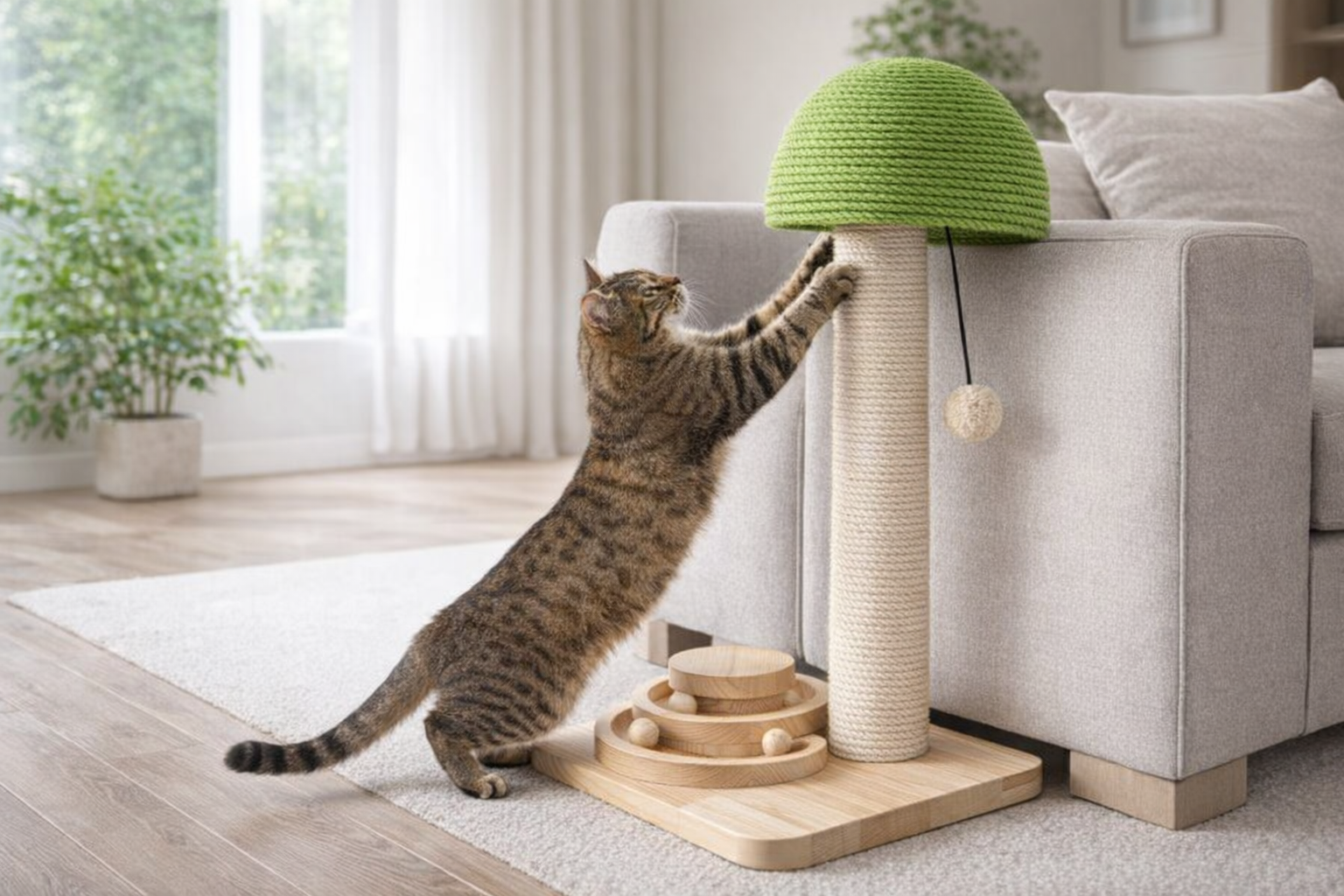
Here’s the reframe that changes everything: your cat isn’t being bad. Scratching is a biological need — it sheds claw husks, marks territory with scent glands in their paws, and stretches their whole body. You can’t stop a cat from scratching. But you can absolutely move it off your couch. Here’s how.
Step 1: Give them something better to scratch
A cat scratches the couch because the couch is there and tall and sturdy. Beat it by offering something more appealing:
- Tall and stable. Cats want to stretch fully upright, so a post should be at least as tall as your cat standing on hind legs, and rock-solid (a wobbly post gets ignored).
- The right material. Most cats love sisal rope or sisal fabric. Some prefer cardboard. Offer both and see what wins.
- Both orientations. Some cats are vertical scratchers, some horizontal. A flat cardboard pad plus an upright post covers your bases.
Step 2: Put it in the right place
This is where most people go wrong. A scratching post hidden in a back corner won’t get used. Place it:
- Right next to the furniture they’re targeting. Redirect at the scene.
- Near where they sleep. Cats love to scratch-and-stretch right after a nap.
- In social, central spots. Scratching is partly territorial; cats want to do it where the action is.
Step 3: Make the post irresistible (and the couch boring)
- Rub or sprinkle catnip on the new post to draw them in.
- Reward them with a treat or praise when they use it.
- Temporarily make the couch unappealing: double-sided sticky tape, a textured throw, or foil on the target spot. Once the habit moves to the post, you can remove these.
What not to do
Don’t punish or spray your cat — it creates fear and stress without teaching the alternative, and stressed cats often scratch more. And please skip declawing; it’s an amputation, banned in many places, and causes long-term pain and behavior problems. The humane, effective path is always redirect, not punish.
The lazy-genius shortcut
A cat tree with sisal-wrapped posts solves two problems at once: it gives them vertical territory and a legitimate scratching surface, often pulling them off the furniture entirely. Pair it with a flat scratcher near the couch and most cats make the switch within a week or two.
Why cats scratch (and why punishment makes it worse)
Scratching is not a behavior problem; it is maintenance. Cats scratch to shed the outer sheath of their claws, to stretch the long muscles of the back and shoulders, and to leave a visible and scented marker that says “mine”. That is why the sofa arm — tall, stable, in the room where you are — is such a good target: it meets all three needs at once. Spraying water or shouting only teaches the cat to scratch when you are out. The fix is to offer something that meets those needs better than the sofa does, right next to the sofa.
What a scratching post needs to beat your couch
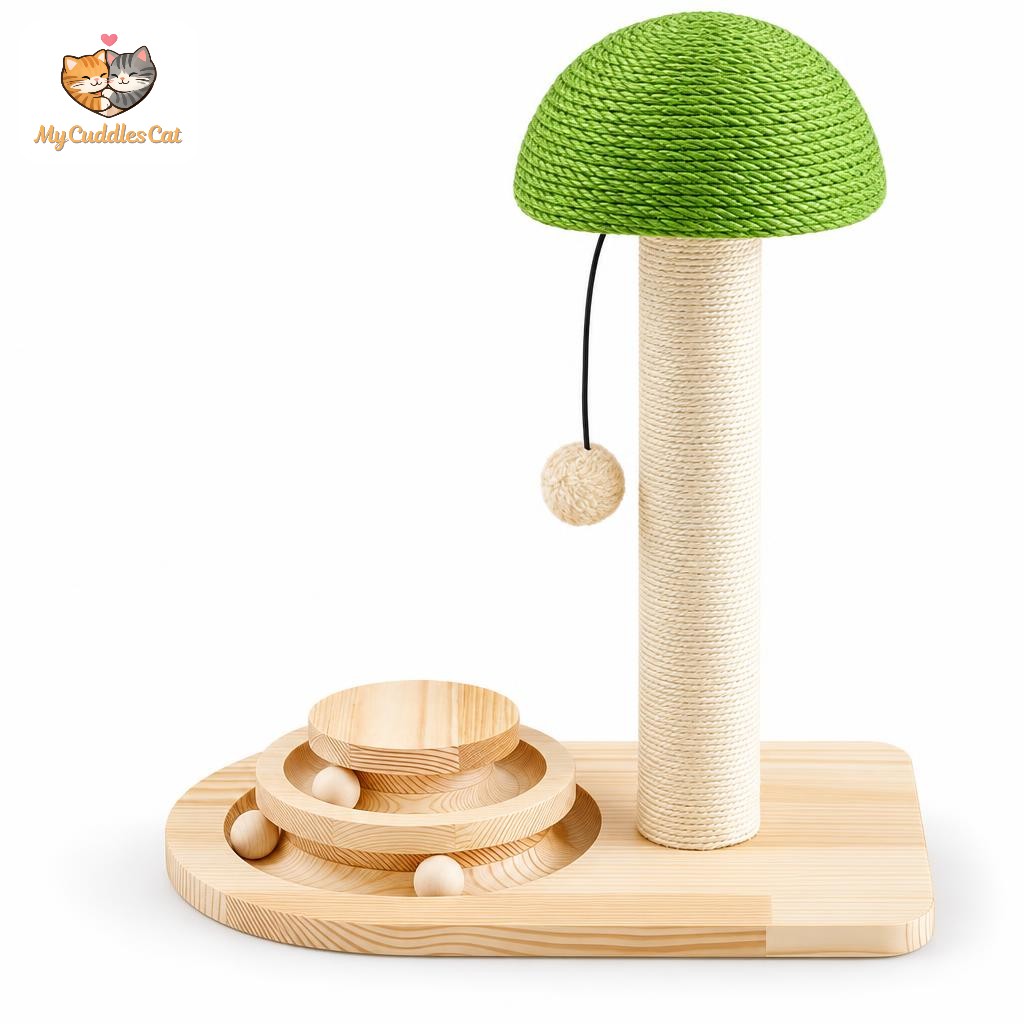
- Height for a full stretch. An adult cat stretched up is around 30 in nose to tail base. A post of 20 in or more lets them reach; a 12 in novelty post does not. Our Mushroom Scratch Post is a 20 in sisal post on a solid wood base.
- A surface that shreds. Cats want texture that gives: sisal rope or sisal fabric for vertical scratching, corrugated cardboard for horizontal. Carpet feels too much like, well, your carpet, which blurs the rule you are trying to teach.
- A base that does not move. If the post rocks on the first pull, the cat goes back to the sofa, which never rocks. Weighted bases and wide footprints win; a tree that locks to the ceiling, like the Summit Cat Tower, cannot rock at all.
- Something to do once they are there. A ball track in the base or a perch on top turns “the thing I scratch” into “the place I hang out”, which is how the habit sticks.
The two-week plan
- Days 1–3 — block and redirect. Put the post directly in front of the scratched spot on the sofa. Cover the spot temporarily with a throw or double-sided tape so the sofa stops working. Every time the cat touches the post, treat.
- Days 4–7 — make the post the better deal. Rub catnip into the sisal, play with a wand toy around the base so the cat’s claws land on it mid-chase, and keep treating.
- Days 8–14 — move it an inch a day. Once the post is being used, slide it toward where you want it to live — a foot per day at most. If scratching returns to the sofa, you moved too fast; go back.
Multi-cat homes and the “one post is never enough” rule
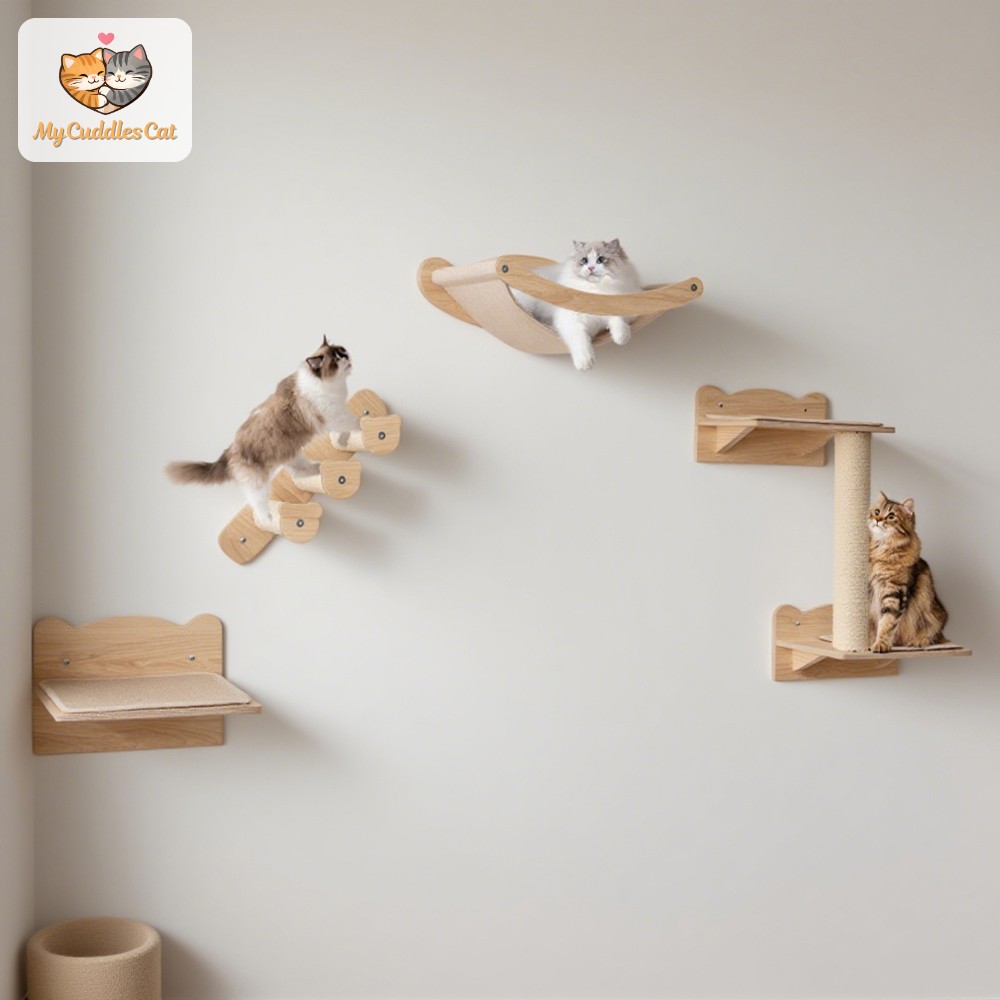
Two cats will rarely share one post without one of them going back to the furniture. Give each cat a scratcher in the room they prefer, plus one at the main doorway, because cats scratch after sleep and on the way into a room. Wall-mounted sisal stairs, like the ones in our Cat Wall Furniture Set, add scratching surfaces without using floor space — the stairs are wrapped in sisal, so the way up is also where the claws go.
Nails, boredom and the other half of the fix
Long, sharp claws do more damage per scratch, so a trim every two to three weeks lowers the stakes while the habit changes; a pair of LED cat nail clippers shows the quick so you stop before it. Boredom scratching — the destructive, pacing kind — drops when a cat has a daily hunt-and-catch session; a self-rolling toy like the Orbit Chaser covers the hours you are at work. Declawing is not a fix; it is an amputation that is banned in several U.S. states and causes litter-box and biting problems later.
Vertical vs. horizontal scratchers: which does your cat want?
| Scratcher type | Cats who prefer it | Place it | Example |
|---|---|---|---|
| Tall vertical sisal post (30 in+) | Cats who scratch sofa arms and door frames, full-stretch scratchers | Beside the damaged furniture, then migrate | Mushroom Scratch Post |
| Angled or flat cardboard pad | Cats who scratch rugs and carpet | On the floor where the rug damage is | Any corrugated pad |
| Post built into a tree | Cats who climb and scratch in one motion | Where the cat surveys the room | Modern Cat Tower |
| Wall-mounted sisal step | Cats who scratch walls and wallpaper | On the wall at stretch height | Cat Wall Furniture Set |
Most cats use both orientations, so a home with one tall post and one flat pad covers nearly everyone. Watch where the damage is: furniture arms and door frames mean vertical, rugs and stair carpet mean horizontal.
Protecting the furniture while you train
Training takes two to three weeks; the sofa needs protecting now. Double-sided sticky tape or a clear vinyl guard on the exact scratched spot makes the surface unpleasant without harming fabric, and it comes off cleanly later. A throw tucked tightly over the arm works on leather. The key is to protect only the targeted area and put the new post within a foot of it — if the whole sofa becomes off-limits the cat simply picks a chair.
Deterrents that are safe — and the ones to skip
- Safe: double-sided tape, vinyl guards, a tight throw, a sisal post placed at the scratch site, feline pheromone diffusers for anxious scratchers.
- Skip: citrus or essential-oil sprays (some are toxic to cats and most just move the scratching elsewhere), motion-activated air cans (create fear of the room, not the sofa), and anything that involves punishing the cat after the fact.
Kittens: start the habit before the furniture suffers
Kittens begin scratching at around eight weeks. A post that is already in place when they arrive — placed by their bed and taller than they will be as an adult — becomes the default surface before the sofa is ever discovered. Reward every use with a treat for the first month, trim the tips weekly, and never play with your hands so claws learn to go into toys and sisal only. A kitten taught this way in month one rarely needs the two-week retraining plan above.
Cardboard and sisal at floor level count too. An accordion cat scratcher gives a horizontal surface, a sisal cat scratcher bed doubles as a nap spot, and a cardboard cat house is a hideout they are allowed to shred.
Frequently asked questions
Why does my cat scratch the couch even with a post nearby?
Usually the post is too short, too wobbly, or in the wrong room. Cats scratch where they wake up and where they greet you; put a tall, stable post at those spots, not in a corner.
Will trimming nails stop scratching?
It reduces damage, not the behaviour. Pair regular trims (see how to trim cat nails) with the right post.
Is declawing an option?
No. It is an amputation of the last toe bone, is banned in many places, and commonly leads to biting and litter avoidance. Posts, trims and training solve scratching without harm.
Start here
Browse sisal scratchers and posts in our Towers & Scratchers and Toys & Enrichment collections — U.S.-delivered in 5–8 business days, cat-approved or your money back.
Stubborn scratcher? Tell us your setup and we’ll suggest a fix.