
The new kitten checklist (what to buy first)

By the MCC team · 5 min read · Reviewed for accuracy
Congratulations — you got a kitten, and your life is now 30% cuter and 100% more chaotic. Before the zoomies begin, here’s exactly what to have ready, what can wait, and what you can skip entirely.
Buy before they arrive (week-one essentials)
These should be in your home before the kitten is:
- Litter box + litter. Start with an open, low-sided box a kitten can climb into easily. One box per cat, plus one extra is the golden rule.
- Food and water bowls. Shallow, wide bowls (whisker-friendly). A water fountain encourages drinking and is worth it long-term.
- Kitten food. Match whatever the breeder or shelter was feeding, then transition slowly to avoid an upset tummy.
- A bed or two. Kittens sleep a lot. A cozy enclosed cat cave or bed gives them a safe place to crash.
- A carrier. You’ll need it on day one and at every vet visit. Get a sturdy one now.
Buy within the first week
- A scratching post or pad. Redirect the clawing before it finds your couch. (See our scratching guide.)
- Safe toys. Wand toys for bonding play, plus a few solo toys. Skip anything with small parts that can be chewed off.
- A breakaway collar + ID (and ask your vet about microchipping).
Can wait a few weeks
- A cat tree (let them settle first, then add vertical space — especially useful in small apartments).
- Grooming tools (a deshedding brush becomes essential as they grow).
- Personalized extras like a name food mat or ID tag — adorable, and a nice “welcome home” gift.
What you can skip
Pricey “starter kits” that bundle a dozen things you’ll never use, fragile toys that shed parts, and anything that claims to “train” a kitten overnight. Cats train you, not the other way around.
One thing people forget
Kitten-proof the room. Tuck away cords, secure blind strings, move toxic plants (lilies are dangerous to cats), and block gaps behind appliances. A curious kitten finds every hazard you didn’t.
The first 48 hours: set up one room, not the whole house
A kitten dropped into a whole apartment hides under the bed for a week. Give them one quiet room instead — a bathroom or bedroom — with everything they need inside it: litter box in one corner, food and water in the opposite corner (cats will not eat next to where they go), a bed, and a scratcher. Sit on the floor and let them come to you. Open the door to the rest of the home after two or three days, one room at a time.
Litter: the three rules that prevent most accidents
- One box per cat, plus one. Even with one kitten, a second box in another room stops “I could not get there in time”.
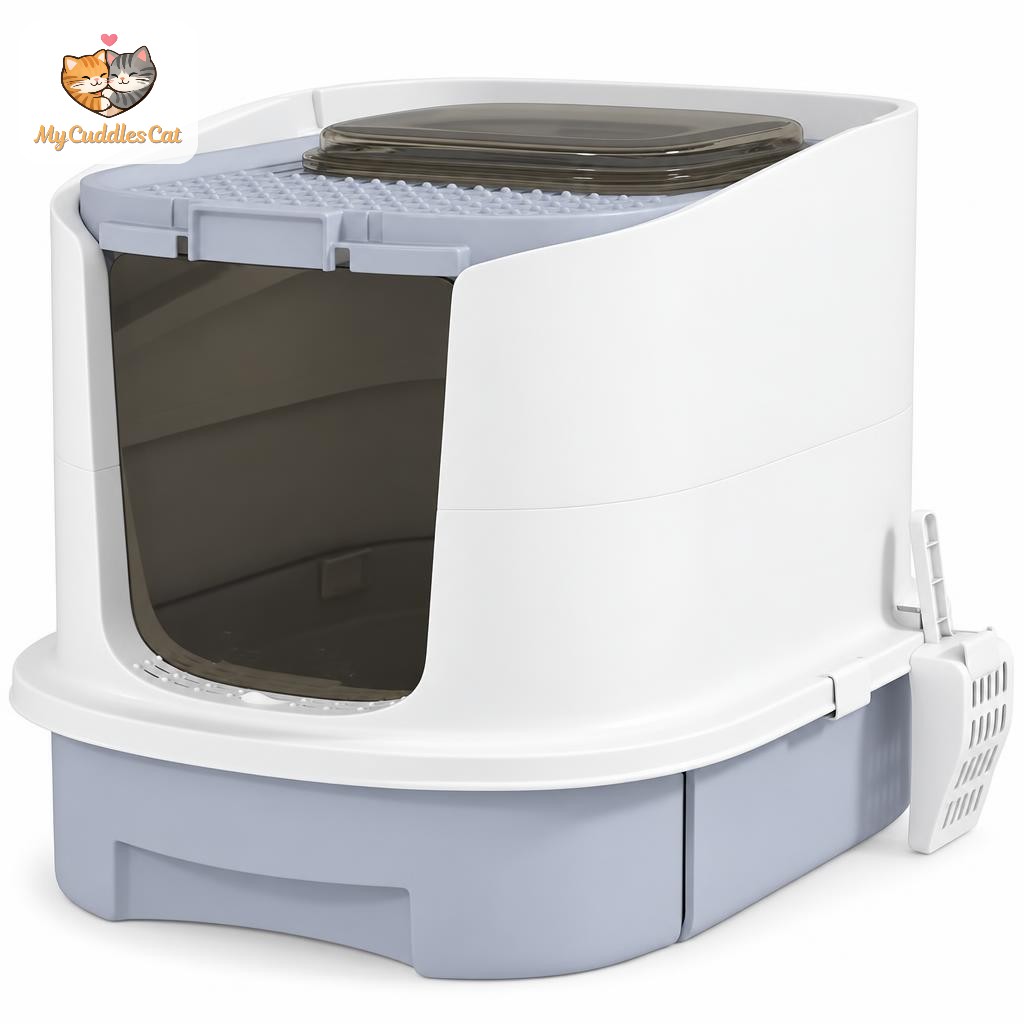
- Low sides first, hood later. A 10-week-old kitten cannot climb a tall box. Start open and low; move to an enclosed litter box around four to six months when they are tall enough to use the door and you are ready for less scatter.
- Scoop daily. The commonest cause of a kitten going outside the box is a box they consider full.
Feeding: bowls, water and the gulper problem
Kittens eat three or four small meals a day until about six months. Use a shallow, wide bowl so whiskers do not touch the sides — a raised dish like the High-Rise Ceramic Cat Dish also keeps the neck in a natural line. Put water in a separate spot from food; many cats drink more from moving water, which is where a cat water fountain earns its place. If your kitten inhales a meal and brings it back up, a maze-style slow feeder bowl fixes it by making every bite a small puzzle.

Play: ten minutes, twice a day, with the right toy
Kitten energy goes somewhere: into the curtains, your ankles, or a toy. Two short hunt-and-catch sessions a day — morning and before bed — are what stop the 3 a.m. zoomies. Rotate a few toys so they stay interesting: catnip mice to bat and carry, a self-moving toy like the Orbit Chaser for solo play while you work, and a wand-style toy for the sessions you run. Put a scratching post in the play room on day one so claws learn the post before they learn the sofa — see how to stop a cat from scratching furniture.
Grooming and health basics
- Nails every two weeks. Start now, while they are small, and they will tolerate it for life. LED nail clippers light the quick so you take off only the tip.
- Brush before you need to. A gentle brush once a week builds the habit; a deshedding brush matters more once the adult coat comes in.
- Vet in the first week. Vaccines, deworming, flea prevention and a microchip; ask about the spay/neuter timing while you are there.
Kitten-proofing, room by room
- Kitchen: cupboard latches on the bin and cleaning products; no string, hair ties or rubber bands on counters; cover the back of the fridge and under the oven if there is a gap.
- Living room: cord covers on blinds and chargers; move lilies and other toxic plants out of the house entirely (lilies are fatal to cats even in small amounts); recliner mechanisms are a known hazard — check before closing.
- Bathroom: toilet lid down, medications in a cabinet, washing machine door shut between loads.
- Bedroom: check drawers and wardrobes before closing; small objects (earrings, pins) off nightstands.
- Everywhere: windows with a gap wider than 2 in need a screen; balconies are not kitten-safe without netting.
Week by week: 8 to 16 weeks
- Week 1 (arrival): one room, litter box and bed in opposite corners, two short play sessions a day, vet visit booked.
- Week 2: open one more room per day; start a weekly 30-second nail trim (see how to trim cat nails); introduce the carrier as a bed, door open.
- Weeks 3–4: full house access; second vaccination; begin teaching “play with the toy, not the hand” by freezing when teeth touch skin.
- Weeks 5–8: move to adult feeding times (three meals, then two by six months); add vertical space — a small tree or shelf — and the first proper scratching post.
Where to spend and where to save
Spend on the things that prevent expensive problems: a large, easy-clean litter box (box avoidance is the number-one reason kittens end up in shelters), a sturdy scratching post taller than the kitten will be as an adult, and a fountain if your kitten is a poor drinker — urinary problems later cost far more than a fountain now. Save on beds (they will outgrow two before adulthood), on toys (a wand and a few crinkle balls beat a basket of plush), and on “kitten” versions of anything you will replace at six months. A realistic first-month budget for the essentials runs between $150 and $300 depending on the litter box and post you choose. The one upgrade worth it from day one is an enclosed or drawer-style litter box, because it keeps litter off the floor while the kitten is still learning to cover — our Hidden Haven Enclosed Litter Box suits kittens through cats of about 10 lb. For keeping it odour-free from the start, follow how to keep a litter box from smelling.
A few more items worth having in the first month: an expandable cat carrier for the first vet visit, a cat litter mat under the box, a catnip kicker toys 3-pack and a 3-way cat tunnel for play, and a cat grooming glove to get them used to being handled.
Frequently asked questions
What do I need for a kitten on the first day?
A litter box with litter, food and water bowls, the same food the kitten was eating, a bed or blanket, a carrier, and one closed room to start in. Everything else can arrive during week one.
When can a kitten use a cat tree?
From about 10–12 weeks for low trees (under 36 in). Keep gaps between levels at 8–10 in and add a tall tree once they are confident jumpers, around five to six months.
How much should a kitten eat?
Follow the weight-based guide on the kitten food packet and split it into three or four meals a day until six months. A kitten should feel lean with a slight waist, not round.
The shopping list, in order of need
Day one: litter box and litter, food and water bowls, a bed, a scratching post, two toys, a carrier for the vet. Week one: nail clippers, a brush, a second litter box. Month one, once you know your cat: a cat tree sized to your home, a window perch if they watch birds, a fountain if they ignore the water bowl. Everything else is a want, not a need.
Start here
Most of this list ships from our U.S. warehouse in 5–8 business days (every product page shows its delivery window), so you’re not waiting weeks with a kitten and an empty house. Browse the new-cat essentials in our shop — and join the Cuddle Club to earn Whiskers on the whole haul.
Questions about what your specific kitten needs? Ask us.