
How to Keep a Litter Box From Smelling (and Hide It in a Small Apartment)
By the MCC team · 10 min read · Updated November 2026
A litter box that smells is not a cat problem — it is a system problem. Ammonia from urine, sulphur compounds from stool, and the litter itself all contribute, and each has a different fix. This guide explains how to keep a litter box from smelling using the order that actually works (scoop → litter → box → room → furniture), what to skip, and when a smell is a vet visit rather than a cleaning job. It also covers the related question most people search next: how to hide the litter box in a small space without making the smell worse.
Why litter boxes smell (and why “more fragrance” backfires)
Fresh cat urine barely smells. The odour arrives as bacteria break urea down into ammonia — a process that accelerates with warmth, moisture and time. Stool odour comes from sulphur compounds that clumping litter traps only if the clump is removed before it dries out and crumbles. Scented litter and plug-in fresheners mask the smell for humans but add a fragrance many cats dislike, and a cat who dislikes the box smell starts going next to it. The strategy is therefore remove and neutralise, never cover.
Step 1 — Scoop twice a day, fully change on a schedule
Nothing else on this list works without this one. Scoop in the morning and evening; urine clumps left over 12 hours are the main ammonia source. Then do a full change: dump everything, wash the box with hot water and unscented dish soap (no bleach — it reacts with ammonia residue), dry, and refill to 3–4 inches. Frequency depends on litter type:
- Clumping clay: full change every 3–4 weeks with daily scooping.
- Non-clumping clay: weekly — it holds urine in the bottom layer.
- Pine, paper, corn or wheat: every 1–2 weeks; plant litters absorb well but hold odour once saturated.
- Silica crystals: every 3–4 weeks for one cat; stir daily.
Step 2 — Pick a litter that controls odour without perfume
For odour, unscented clumping litter with activated charcoal or baking soda is the reliable middle ground: tight clumps lift urine out completely, and the additive neutralises ammonia rather than hiding it. Silica crystals absorb the most moisture per pound and are excellent for odour, but some cats dislike the texture. Plant-based litters are great for dust and tracking but weaker on ammonia once damp. Whatever you choose, keep the depth at 3–4 inches — too shallow and urine reaches the plastic, which absorbs odour permanently.
Step 3 — Fix the box itself
Plastic scratches; scratches hold bacteria; bacteria make ammonia. Replace a plastic box every 12–18 months or when the floor is visibly scored. Size matters too — a box should be 1.5× your cat’s body length so urine lands in litter, not on the wall. For odour control the box design helps in two ways:
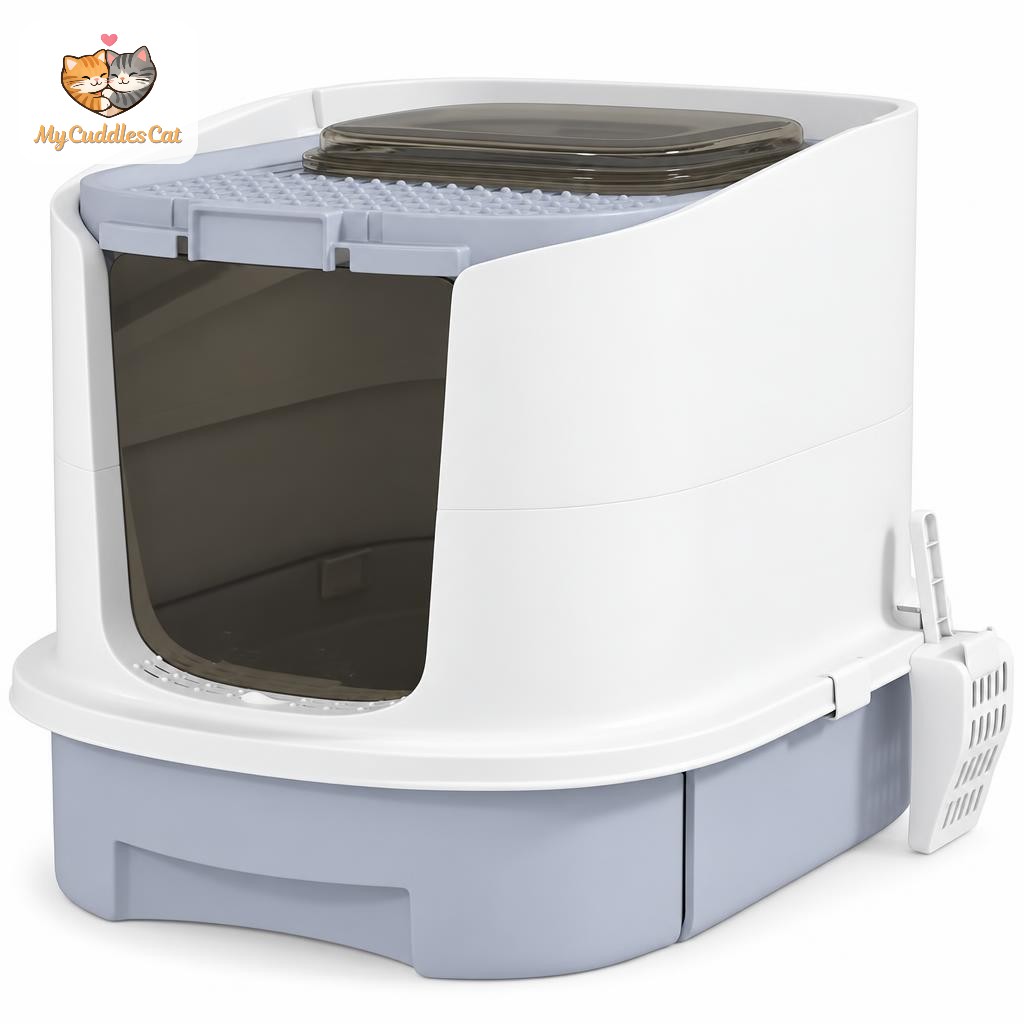
- Enclosed boxes keep smell contained between scoops and stop litter scatter. The trade-off is that they concentrate odour inside, so they demand more diligent scooping, not less, and a cat over about 10 lb needs a large model. Our Hidden Haven Enclosed Litter Box uses a front door plus top entry and a pull-out drawer so scooping takes thirty seconds — suited to cats up to 10 lb.
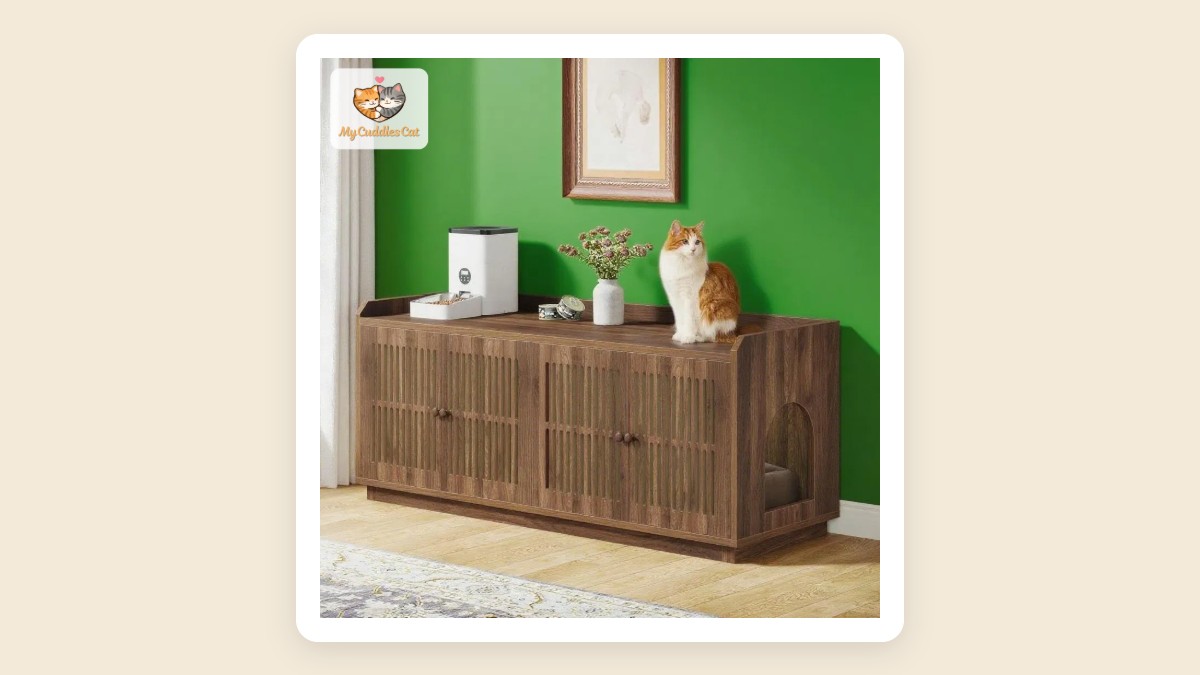
- Litter box furniture hides the box inside a cabinet with a vented door. It is the best answer for living rooms and open-plan apartments because the cabinet blocks line-of-sight and most of the smell, while a standard open box inside stays easy to clean. Our Hidden Haven Litter Cabinet is 55 in long with a litter side and a storage side for scoop, bags and spare litter.
Does litter box furniture help with smell?
Yes, with one condition. A cabinet reduces the smell that reaches the room by containing it, exactly like an enclosed box does, and because the box inside is usually a large open tray it is easier to keep clean than a hooded box. But a cabinet with a dirty box inside becomes an odour reservoir. The rule: furniture solves the room problem, scooping solves the source problem. Choose a cabinet with ventilation slots or a gap under the door, line the floor of the litter compartment with a washable mat, and keep a charcoal filter or an open box of baking soda on the storage side.
Step 4 — Treat the room, not just the box
- Ventilation beats purification. A box near a window you can crack, or in a bathroom with an extractor fan, smells less than one in a closed closet.
- Air purifiers help only with activated carbon. HEPA alone catches dust, not ammonia gas; look for a unit with a substantial carbon stage and run it on low, continuously, within six feet of the box.
- Baking soda works at the source. A thin layer under the litter (not mixed through, which some cats dislike) neutralises acid odours for weeks.
- Enzyme cleaner for accidents. Any urine outside the box must be treated with an enzymatic cleaner, or the spot keeps smelling — and keeps attracting the cat.
- Wash the mat. Litter mats collect urine-dusted granules; rinse weekly.
How to hide a litter box in a small apartment (without trapping the smell)
Three placements work in studios and one-bedrooms: inside a litter cabinet that doubles as a side table or TV stand; in a bathroom corner with the door propped open by a cat-sized gap; or in a closet with a cat door cut in. Avoid the kitchen (food smells plus litter smells plus heat) and avoid anywhere the cat has to pass a noisy appliance to reach the box. Whatever you choose, keep one box per cat plus one — a second hidden box in a two-cat home does more for odour than any additive because each box gets half the use. For the full room-by-room layout logic see our small-apartment setup guide.
Multi-cat homes: the extra rules
Odour scales faster than cat count because cats avoid boxes other cats have used. Run n+1 boxes, spread them across the home rather than lined up in one room, scoop each twice daily, and use the same unscented litter in all of them so no box becomes the “bad” one. A litter cabinet in the living room plus an enclosed box in the bathroom is a common two-cat setup that keeps both out of sight.
When the smell is a health signal
A sudden change in odour with no change in routine deserves a vet call. Strong ammonia with very frequent small urinations can indicate a urinary tract infection; sweet or unusually strong urine can point to diabetes or kidney disease; a sharp increase in stool odour may follow a diet change or parasites. Cats hide illness well, and the litter box is often the first place it shows.
The 60-second daily routine that keeps a home smell-free
- Scoop every box morning and night into a sealed bin or bag.
- Top up litter to the 3–4 inch line once a week.
- Shake out the mat and wipe the box rim with an unscented wipe.
- Full wash and refill on the schedule for your litter type.
- Replace the box (or the tray inside your cabinet) every 12–18 months.
Placement rules that cut smell before you buy anything
Where the box lives changes how much you smell it. Cool rooms slow the bacteria that make ammonia, so a box in a bathroom or utility room smells less than the same box beside a radiator or in a sunny corner. Hard floors are better than carpet, which absorbs tracked litter dust and odour. Keep the box at least six feet from food and water — cats avoid eating near their toilet, and a box that gets avoided gets used in bursts, which smells more. Finally, do not put a box in a dead-end closet with no airflow unless the door has a cat flap or a permanent gap; stagnant air is the one thing every litter type struggles with.
Do automatic litter boxes smell less?
They scoop more often than you will, which removes the biggest odour source, and most seal waste in a drawer. But that drawer still needs emptying every few days, the mechanism needs a monthly wash, and some cats refuse the noise and the enclosed rotation. For a single cat with a disciplined scooping routine, a well-sized manual box inside a vented cabinet matches an automatic unit on smell at a fraction of the cost. Automatic boxes earn their keep in multi-cat homes and for owners who travel.
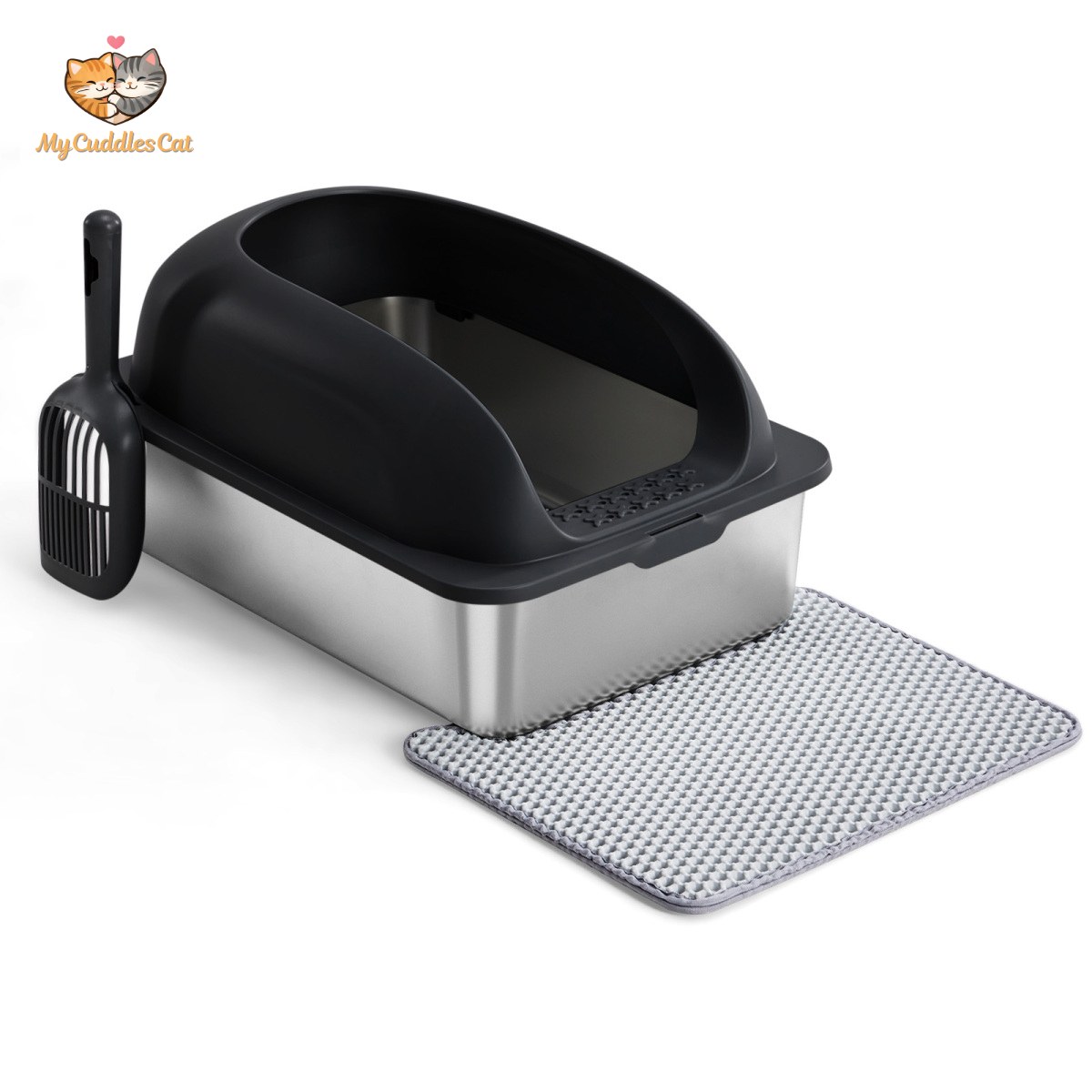
Two pieces of gear make the routine easier. A stainless steel litter box resists the scratches that plastic picks up over time, so there are fewer grooves for odor to settle into, and a cat litter mat under the box keeps tracked litter in one place.
Frequently asked questions
Why does my litter box smell like ammonia even after scooping?
Urine has reached the plastic or the litter is too shallow or too old. Do a full wash, refill to 3–4 inches, and replace the box if the base is scratched.
Does an enclosed litter box smell less?
Less in the room, more inside the box. It helps when you scoop twice daily and choose a large model; it makes things worse if scooping slips.
Is baking soda safe in cat litter?
Yes in a thin layer under the litter. Avoid heavy mixing, essential oils and scented powders, which can irritate a cat’s airways.
Will a litter cabinet make my cat stop using the box?
Rarely, if you transition gradually: place the open box beside the cabinet for a few days, then inside with the door open, then close the door. Keep the same litter throughout.
Related: New kitten checklist · How to keep cat gear clean · Shop litter boxes and litter furniture.