
How to Stop Litter Tracking: 5 Fixes That Actually Work
By the MCC team · 7 min read · Reviewed for accuracy
To stop litter tracking, work on three things in this order: the litter itself, the box, and the floor around the box. Litter leaves the box in two ways, kicked out during digging and carried out between toes and in fur, and no single product fixes both. This guide covers the five fixes that make the biggest difference, the mistakes that make tracking worse, and a two-minute routine that keeps it under control.
Why litter ends up everywhere
- Digging and covering. Cats are thorough. An enthusiastic digger can throw litter a foot or more past the rim of a low box.
- Paws. Small, light granules wedge between toe pads and fall out over the next ten steps.
- Fur. Long-haired cats carry granules in the fur between their toes and on their hind legs.
- The exit. A cat that jumps out of the box lands with force and scatters whatever is on its feet.
Knowing which of these is your main problem tells you which fix to start with. Litter in a ring around the box is a kicking problem. A trail down the hallway is a paws problem.
Fix 1: Choose a litter that tracks less
Fine, lightweight litter clumps well but travels furthest. Larger or heavier granules stay in the box better.
- Heavier clumping clay tracks less than lightweight clay.
- Pellet litters, such as pine or paper, track the least, though some cats dislike the feel.
- Very dusty litter leaves a film on floors and paws; a low-dust formula helps everywhere.
If you change litter, do it gradually. Mix a little of the new one into the old and increase it over a week or two, because a cat that dislikes the new texture may stop using the box, which is a much bigger problem than tracking.
Fix 2: Use a box with higher sides
A low tray is the main reason litter gets kicked out. High sides keep the digging inside, and a lower entry on one side lets the cat step in rather than jump. Stainless steel boxes have an extra advantage: the surface resists the scratches that plastic picks up, so litter and odor have fewer grooves to cling to, and the box rinses clean.
Size matters as much as height. The box should be about one and a half times the length of your cat so it can turn and dig without standing on the rim.
Fix 3: Put a litter mat at the exit
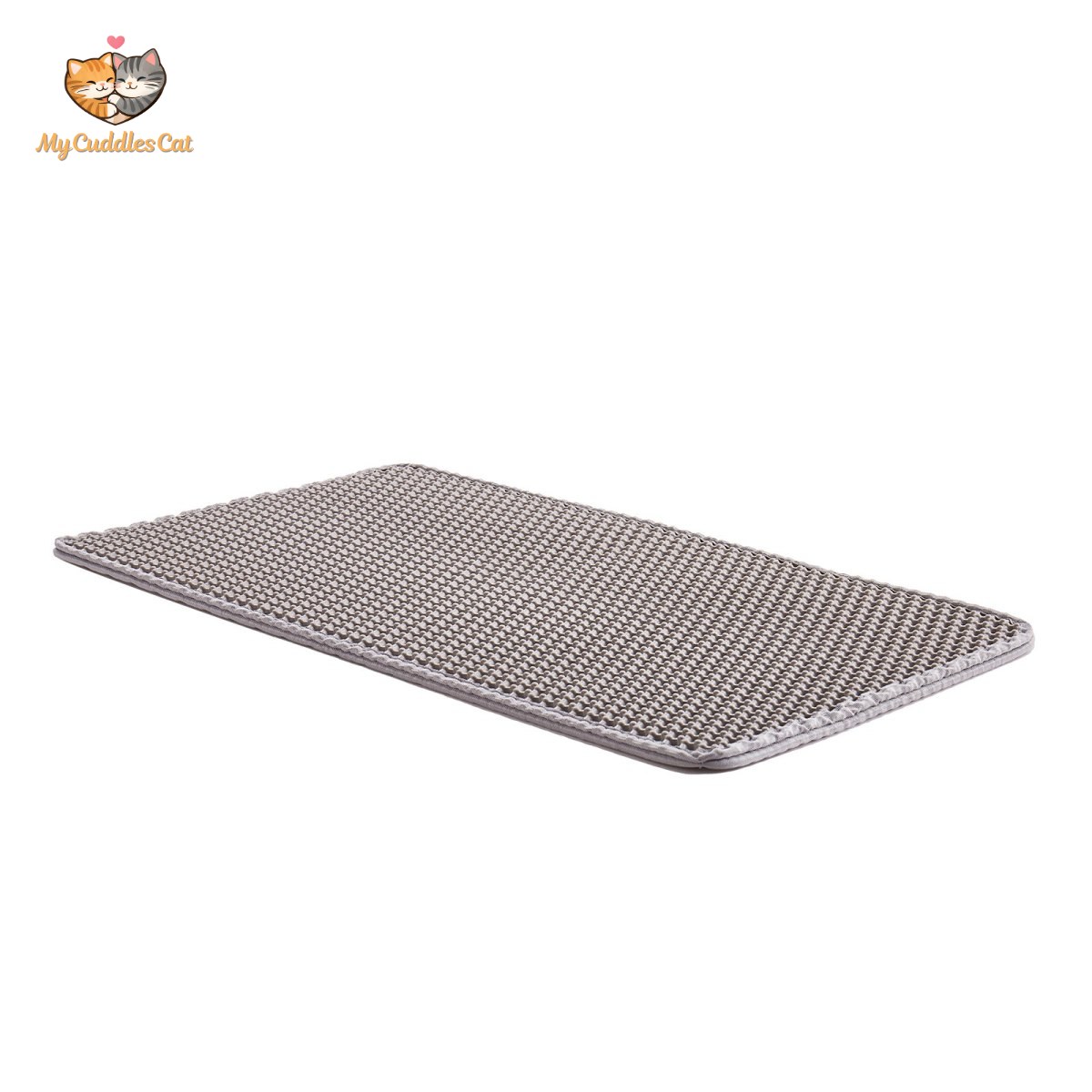
A mat catches what comes out on paws. The ones that work best have a textured top layer that opens the toes and lets granules fall through to a layer underneath, so the litter is trapped rather than sitting on the surface to be walked across again.
- Make it big enough that your cat takes at least two or three steps on it. A mat smaller than the box does very little.
- Place it where your cat actually exits, which is not always the front.
- Choose one with a waterproof base if your cat sometimes misses the box.
Fix 4: Keep the litter depth right
More litter is not better. Two to three inches is enough for most clumping litters. Deeper than that and every dig sends a wave over the side; shallower and the cat digs to the bottom and scatters what is there.
Fix 5: Trim the fur between the toes
Long-haired cats carry litter in the tufts between their pads. Keeping that fur trimmed level with the pads, and brushing the hind legs regularly, removes the places where granules lodge. If your cat will not tolerate it, a groomer or vet nurse can do it in a minute.
The two-minute routine
- After scooping, shake the mat into the box or the bin.
- Sweep or vacuum the square yard around the box once a day. A small handheld vacuum kept nearby makes this realistic.
- Once a week, rinse the mat and wipe the floor underneath.
- When you change the litter completely, wash and dry the box so damp litter does not stick to paws.
Tracking is never zero, but with the right litter, a high-sided box and a mat, the daily job shrinks to seconds.
Where to put the box
Placement changes how far litter travels.
- A corner limits the directions litter can be kicked.
- Hard flooring is far easier to clean than carpet. If the box must sit on carpet, put a large waterproof mat or a boot tray under the whole setup.
- Give the cat a clear exit path across the mat. If the mat is to one side and the cat leaves by the other, it does nothing.
- Litter box furniture, a cabinet that hides the box, contains scatter on three sides and gives the cat a short walk across a liner before it reaches your floor.
Mistakes that make tracking worse
- A covered box with a top exit and no landing mat: the cat jumps out and scatters litter from height.
- Overfilling the box.
- A mat that is too small, too smooth, or placed where the cat does not walk.
- Switching to a low-tracking litter overnight and finding the cat will not use it.
- Scented litter with a strong perfume. Some cats rush out of the box to get away from it, which makes them track more.
Multi-cat homes
The usual guideline is one box per cat plus one extra, in different places. More boxes means less traffic per box and less litter moved overall, and it prevents the queueing and guarding that make cats bolt out of the box. Give each box its own mat.
Our picks
The Cat Litter Mat is a 24 x 15 inch double-layer mat: litter falls through the honeycomb top and stays between the layers, and the waterproof base protects the floor. It rinses clean. Pair it with the Stainless Steel Litter Box, a high-sided box that keeps digging inside and resists the scratches where odor builds up.
If you want the box out of sight, the Hidden Haven Litter Cabinet encloses it in furniture, and the Hidden Haven Enclosed Litter Box is a hooded option. For odor, read our guide on how to keep a litter box from smelling, and see everything in Litter and Hygiene.
Frequently asked questions
What is the best way to stop litter tracking?
Combine three things: a heavier or larger-granule litter, a box with high sides, and a textured mat at the exit that is big enough for two or three steps.
Do litter mats really work?
Yes, for litter carried on paws. They do not stop litter being kicked over a low rim, which is why a high-sided box matters too.
Which cat litter tracks the least?
Pellet litters track least, followed by heavier clumping clay. Fine, lightweight litters track the most.
Does a covered litter box reduce tracking?
It reduces kicked-out litter but not what is carried on paws. A top-exit box needs a mat where the cat lands.
How big should a litter mat be?
Large enough that your cat takes at least two or three steps on it when leaving. For most boxes that means a mat at least as wide as the box.
Why does my cat kick litter out of the box?
Digging and covering is normal behavior. A box that is too small or too shallow, or litter that is too deep, makes it worse.