
Why Won’t My Cat Drink Water? 7 Ways to Boost Hydration
By the MCC team · 7 min read · Reviewed for accuracy
If your cat won’t drink water, the usual reasons are that it already gets moisture from wet food, it dislikes where or how the water is offered, or the water is not fresh enough for its taste. Cats descend from desert animals and have a low thirst drive, so many drink less than their owners expect. The exception is a sudden change: a cat that stops drinking, or stops eating and drinking, needs a vet. This guide covers what is normal, the warning signs, and seven practical ways to get a healthy cat drinking more.
When to call the vet
Do not wait and experiment at home if:
- Your cat has not had any water or food for 24 hours.
- Your cat is lethargic, vomiting, has diarrhea, or is hiding.
- The gums feel dry or tacky, or the skin over the shoulders stays tented when gently lifted.
- Your male cat is straining in the litter box or producing little or no urine. This is an emergency.
- Your cat is suddenly drinking much more than usual. That can be as important as drinking less.
This article is general information and not a substitute for veterinary advice.
How much water does a cat need?
A common rule of thumb is about 4 ounces of water per 5 pounds of body weight per day, including the water in food. Wet food is roughly three-quarters water, so a cat eating mostly wet food may barely visit the bowl and still be well hydrated. A cat on dry food needs to drink most of its water, around a cup a day for a 10-pound cat.
The practical test is the litter box and the cat. Regular urine clumps of a normal size, a glossy coat and normal energy tell you more than watching the bowl.
Why your cat is ignoring the water bowl
- The water is near the food. Many cats prefer to drink away from where they eat.
- The water is near the litter box. Cats avoid drinking close to where they eliminate.
- The bowl is narrow or deep. Whiskers brushing the sides can be uncomfortable.
- The water is stale. A film of dust and hair forms within hours.
- The bowl smells of detergent or plastic.
- The spot is busy or cornered, so the cat cannot watch the room while it drinks.
- Another cat guards the bowl.
- Your cat prefers moving water and is getting it from the tap or the shower instead.
Seven ways to get a cat to drink more
1. Move the water away from food and litter
Put a bowl in a quiet place a few feet from the food, and never beside the litter box. This single change is often enough.
2. Offer more than one water station
Place water in two or three rooms, and on each floor of the house. Cats drink more when water is on their normal route.
3. Use a wide, shallow bowl
Ceramic, glass or stainless steel bowls stay cleaner than scratched plastic and do not hold odor. Fill them close to the brim so your cat does not have to put its face deep into the bowl.
4. Refresh the water every day
Empty, rinse and refill daily rather than topping up. Wash the bowl with mild soap and rinse well a few times a week.
5. Try moving water
Many cats are drawn to running water. A fountain keeps water circulating, which keeps it cooler and stops the surface film that puts cats off a still bowl. Introduce it next to the old bowl and leave both for a week.
6. Add moisture through food
Feeding some or all wet food is the most reliable way to raise water intake. You can also add a spoonful of warm water to wet food, or a little water to dry food if your cat accepts it. Change diet gradually and ask your vet first if your cat has a medical condition.
7. Make it interesting
Some cats drink more from a glass on a side table than a bowl on the floor. Others like an ice cube to bat around in the bowl, or a little water from a can of tuna packed in water mixed into their own. Flavoring should be occasional and never salty broth, onion or garlic.
Things that do not help
- Forcing water with a syringe unless your vet has shown you how and asked you to.
- Milk. Most adult cats do not digest lactose well.
- Removing dry food suddenly to force a switch to wet.
- Putting water only in the kitchen because that is where the food is.
Seasonal and life-stage notes
- In summer and in heated homes in winter, cats lose more water and bowls evaporate faster. Check levels twice a day.
- Kittens need shallow, stable bowls they cannot tip or fall into.
- Senior cats may drink less if getting to the bowl hurts. Put water close to where they sleep, at a comfortable height.
- Cats with kidney or urinary problems need a hydration plan from their vet. Follow it rather than general advice.
How to tell it is working
Over one to two weeks, look for slightly larger or more frequent urine clumps, more visits to the water, and a cat that seems itself. If you want a number, fill the bowl with a measured amount in the morning and measure what is left the next morning, allowing a little for evaporation.
Gear that helps
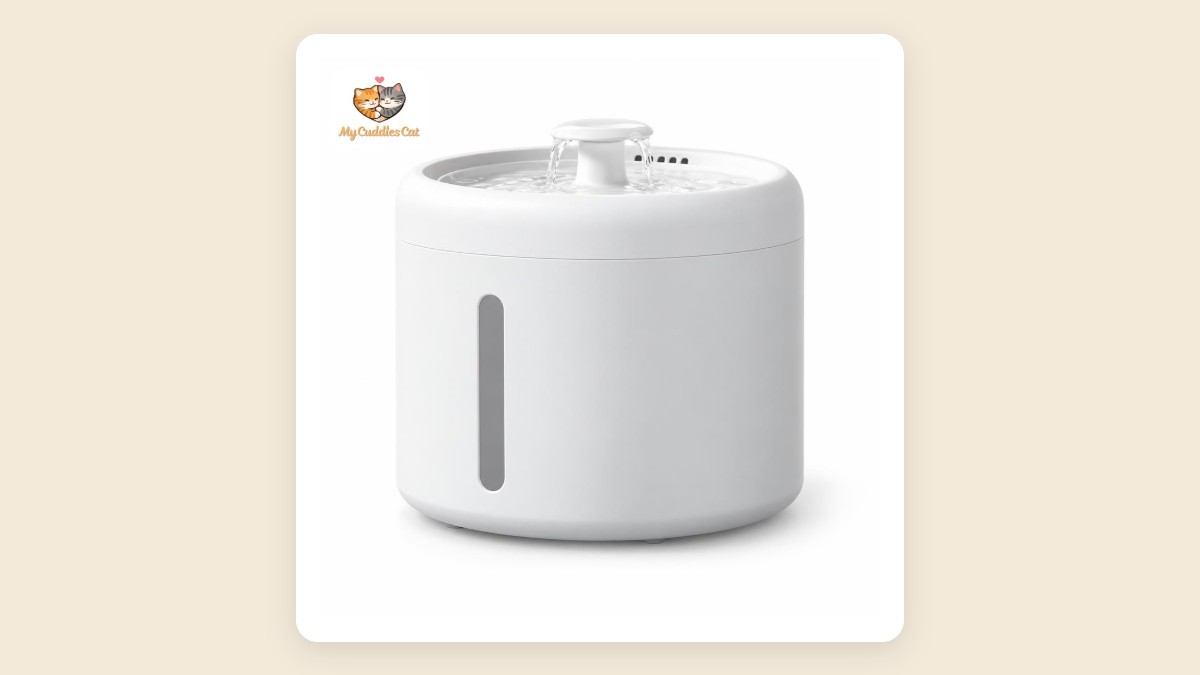
The Fresh Flow Water Fountain holds about 2 liters (8 cups), runs on a quiet USB-powered pump, and has a water-level window so you can see when to top up; the lid, spout and pump lift out for rinsing. Our guide to choosing the best cat water fountain covers placement and cleaning.
For whisker comfort at mealtimes, the High-Rise Ceramic Cat Dish is a shallow 7.1-inch glazed ceramic plate raised 3.3 inches. If your cat also eats too fast, see why cats throw up after eating. Browse everything in Feeding and Water.
Frequently asked questions
Is it normal for a cat to not drink much water?
Yes, especially on wet food. Cats have a low thirst drive. What is not normal is a sudden drop in drinking, or not drinking alongside not eating or seeming unwell.
How long can a cat go without water?
Do not test it. A cat that has had no water or food for 24 hours should see a vet, sooner if it seems unwell.
How can I tell if my cat is dehydrated?
Signs include dry or tacky gums, low energy, sunken eyes, and skin over the shoulders that is slow to fall back when gently lifted. Any of these needs a vet.
Do cats drink more from a fountain?
Many do, because moving water is more appealing and stays fresher. Keep the old bowl available while your cat gets used to it.
Should I put water next to my cat’s food?
Usually not. Many cats prefer water a few feet away from food, and well away from the litter box.
Can I give my cat flavored water?
Occasionally, in small amounts, such as water from tuna packed in water. Avoid salt, onion, garlic and milk.