-
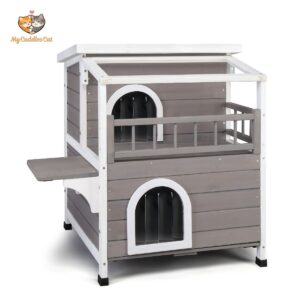
$164.95A 2-story outdoor cat house in fir wood with an asphalt roof, a raised floor and two doors, so a porch or backyard cat has a dry place to sleep and a second way out.
- Fir wood frame with an asphalt-covered roof that sheds rain
- Raised on legs, so the floor sits off wet, cold ground
- A door on each level, so a cat is never cornered
- Hinged roof and a slide-out floor for easy cleaning
- 30.5 x 25.4 x 30 in overall; rated by the supplier for up to 3 adult cats (44 lb)
-
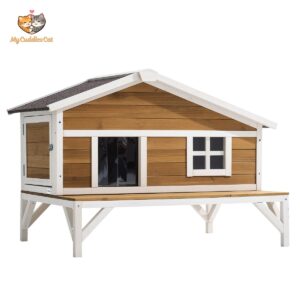
$243.95A big outdoor cat house, 43.5 inches wide, with foam-insulated walls, a sloped asphalt roof and a large front platform where cats can stretch out, eat and watch the yard.
- 43.5 x 33.5 x 31 in overall: the largest footprint in our range
- Four walls built from wood panels with a foam core
- Sloped asphalt roof and legs raised 2.56 in off the ground
- Large platform in front of the door for sunbathing
- Feeding zone you can move to suit how your cats eat
-
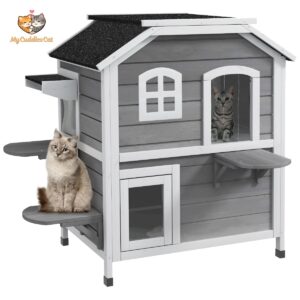
$184.95A wooden feral cat house with four ways in and out, including an escape door, so a wary stray or community cat is never cornered inside. Asphalt roof, raised floor, two levels.
- Four entrances: two curtained doors with a ledge, a push-through escape door and a floor hole between the levels
- Fir wood with waterproof paint and an asphalt roof
- Floor raised 3.3 in off the ground to keep out damp
- Roof opens so you can clean and reach in from above
- 39.2 x 29.9 x 35.8 in overall with its jump platforms; the maker recommends it for 1 to 2 cats under 10 lb
-
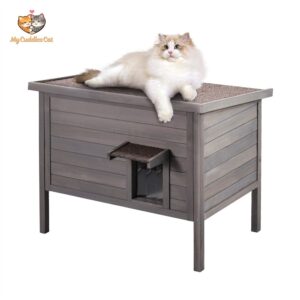
$156.95A wooden insulated cat house with foam insulation on all six sides, a sloped asphalt roof and a removable door flap, so an outdoor cat has a dry, draft-free place to sleep when the weather turns cold.
- Foam insulation in the walls, floor and roof (six sides, per the supplier)
- Sloped asphalt roof with an asphalt eave over the door to shed rain
- Raised on legs, so the floor stays off wet, cold ground
- Thick PVC door flap that blocks wind and comes off in summer
- 34 x 22 x 27 in overall, two rooms inside; the supplier rates it for 1 to 3 cats
-
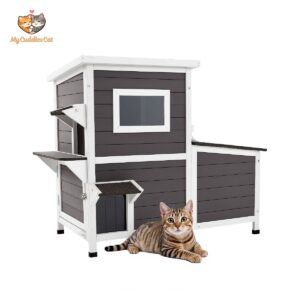
$226.95An outdoor cat house for multiple cats: 42 inches wide with three separate rooms, so up to three cats can shelter together without sharing one sleeping space.
- 42 x 25 x 34 in, with three separate rooms on two levels
- Fir wood panels with a sloped asphalt roof
- Raised 2.64 in off the ground on legs
- Clear windows and PVC door flaps
- Hinged roof and removable floor panels for cleaning
- Not insulated and not heated
-
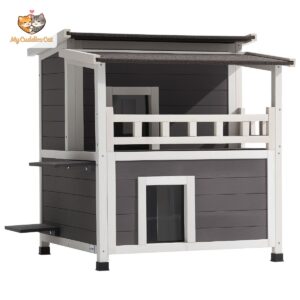
$172.95An outdoor cat house for winter with foam-insulated walls, a sloped asphalt roof, raised legs and a PVC door curtain, built on two levels so up to three cats can share it through the cold months.
- Four walls made of wood panels with a foam core that slows heat loss
- Sloped asphalt roof and 1.97 in raised legs keep rain, snow and ground damp out
- PVC door curtain cuts the wind and still lets light in
- Two levels plus a balcony, so cats can sleep apart
- 33 x 29.5 x 32 in overall; the supplier rates it for 1 to 3 cats
-
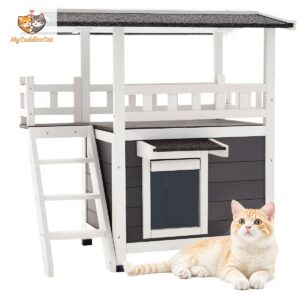
$121.95A weatherproof outdoor cat house in solid fir with a sloped asphalt roof and a raised base: one enclosed room to sleep in, and a roofed balcony reached by stairs for watching the yard in the dry.
- Solid fir wood and a sloped asphalt roof, described by the supplier as resistant to rain, snow and sun
- Base raised 1.97 in so water does not pool under the floor
- PVC door flap keeps wind and rain out and comes off in summer
- Stairs to a roofed balcony, plus a side window
- 30 x 22 x 30 in overall; assembles with twist screws
How to choose an outdoor cat house
Cat houses for outside cats all promise the same thing, so choose by the problem you need solved. Start with your weather, then count the exits, then check the size against your cats and your space. The table shows how our seven houses differ.
Start with your weather
If nights drop below freezing, insulation matters more than anything else. Foam in the walls slows heat loss, and foam under the floor and in the roof slows it further. In mild or rainy climates a weatherproof house is enough: a sloped asphalt roof, a raised floor and a covered door keep a cat dry. None of our houses is heated, so none needs a power cord.
Count the exits
House cats will use a shelter with one door. Feral and stray cats often will not, because one door means no way out if another animal arrives. For a wary cat, pick an outdoor cat shelter with a second door or an escape door.
Size it to the cats, not the yard
A cat warms a small room with its own body heat and cannot warm a large one. For one cat in winter, smaller is warmer. Choose a bigger house when several cats share it or when you want a deck for daytime lounging, and check the door size in the specs if your cat is large.
Placement and bedding
Put the house on level ground with the door turned away from the wind, against a wall or under an overhang if you can. Use straw for bedding outdoors: it sheds moisture and lets a cat burrow in, while blankets and towels get damp and cold. If your cat lives indoors and only needs a hideaway, see the Felt Cat House in Beds & Caves.
Which outdoor cat house is the warmest?
The Insulated Cat House, because the supplier builds foam insulation into all six sides and the inside is small enough for body heat to build up. The Outdoor Cat House for Winter and the Big Outdoor Cat House have foam-insulated walls.
Are these outdoor cat houses heated?
No. None of them has a heating pad or needs power. The insulated houses hold in a cat's own body heat, and straw bedding adds to it.
What should I put inside an outdoor cat house?
Straw. It stays dry and lets a cat burrow in. Avoid blankets, towels and hay outdoors, because they soak up moisture.
How do I get an outdoor cat to use a cat house?
Place it where the cat already rests, feed nearby rather than inside, and leave it alone for a week or more. Outdoor cats take time to trust anything new.
Do the houses need assembly?
Yes. Each one arrives flat-packed with a manual. Box sizes and weights are on each product page.