
Best Cat Toys for Indoor Cats: Types, Safety and a Daily Play Routine
By the MCC team · 7 min read · Reviewed for accuracy
The best cat toys for indoor cats are the ones that let your cat do what a cat is built to do: stalk, chase, pounce, grab and bite. An indoor cat has no mice to hunt, so toys are how that energy gets spent. This guide explains the types of toy, which suit which kind of cat, how much play a cat needs, and how to keep toys interesting without buying a new one every week.
Quick picks: the Orbit Chaser for solo chase, the Catnip Kicker Toys 3-Pack for wrestlers and the 3-Way Cat Tunnel for ambushers. The guide below explains which type suits which cat.
Why indoor cats need to play
Play is a rehearsal of hunting. A cat that never gets to finish that sequence finds other outlets: attacking ankles, shredding the sofa, racing through the house at 3 a.m., or overeating out of boredom. Regular play also keeps weight down and gives shy cats confidence. You do not need a room full of toys. You need a few different types and a routine.
How much play does an indoor cat need?
A good baseline for an adult cat is two sessions a day of about 10 to 15 minutes each, ideally before meals so the pattern is hunt, eat, groom, sleep. Kittens and young cats need more and shorter bursts. Seniors still benefit from gentle play at their own pace. Watch your cat rather than the clock: panting or flopping on one side means stop.
The six types of cat toy
1. Chase toys
Anything that moves away from the cat triggers the chase: balls, rolling toys and motorized toys. Self-moving toys are valuable for cats that are home alone during the day, because they give the cat something to react to when nobody is there to throw a ball.
2. Kick and wrestle toys
Long, soft kickers let a cat grab with the front paws and rake with the back feet, the move it would use on larger prey. They are the best redirect for a cat that wrestles your arm. Many are filled with catnip.
3. Hide and ambush toys
Tunnels, boxes and paper bags give a cat somewhere to stalk from. Ambush play is especially good for cats that are nervous in open spaces, and for multi-cat homes where cats like to chase each other.
4. Puzzle and food toys
These make a cat work for kibble or treats. They slow down fast eaters and occupy cats that are driven by food more than by movement.
5. Wand toys
A lure on a string, moved by you. Wands give the most intense exercise and are the best way to bond, but they need a person on the other end and should be put away afterwards so the string is never chewed or swallowed.
6. Scratch-and-play toys
Scratchers with a ball track or a toy attached combine two needs in one object and keep claws away from furniture.
Match the toy to the cat
- The sprinter chases anything that rolls: choose chase toys and tunnels.
- The wrestler grabs and bunny-kicks: choose kickers.
- The thinker watches before acting and loves food: choose puzzle feeders.
- The ambusher hides behind doors: choose a tunnel.
- The cautious cat startles at noise: choose quiet toys with a slow mode and avoid loud motors.
- The senior prefers low effort: choose kickers, catnip and gentle wand play on the floor.
Do indoor cats get bored?
Yes, and boredom rarely looks like boredom. It looks like a cat that sleeps most of the day and then tears around at night, one that begs for food an hour after eating, or one that picks fights with another cat or with your feet. Before you treat these as behavior problems, add structured play for two weeks and see what changes. Many of them fade once the cat has a daily outlet.
Set up the room, not just the toy box
Toys work better in a home that gives a cat places to use them.
- Height: a cat tree or shelf gives a lookout and a launch point for chase games.
- A window view: birds and passing people are free entertainment for hours.
- Hiding spots: a tunnel, a box or the space under a chair gives an ambusher somewhere to start from.
- A clear runway: a hallway or a strip of open floor lets a chase toy actually roll.
None of this needs to be expensive. A cardboard box and ten minutes of your attention beat a costly toy that sits in a corner. What you are building is a routine your cat can predict: play, food, rest, at roughly the same times each day.
Toy safety basics
- Check toys weekly and throw away anything with loose threads, exposed stuffing or cracked plastic.
- Put string, ribbon and wand toys away after play. Swallowed string is a genuine emergency.
- Avoid small parts that can be bitten off, and keep hair ties and rubber bands out of reach.
- Rechargeable toys are for supervised chewers only. If your cat gnaws hard plastic, choose plush or cardboard instead.
- Laser pointers never let the cat catch anything, which frustrates some cats. If you use one, end the session by landing the dot on a real toy or a treat.
Does catnip work on every cat?
No. Sensitivity to catnip is inherited, and a sizeable minority of cats do not react at all. Kittens under a few months old usually ignore it too. For cats that do respond, the effect lasts around 10 minutes and then wears off for an hour or so. Catnip is safe; store catnip toys in a sealed bag between sessions so the scent lasts longer.
Keep toys interesting: the rotation rule
Cats lose interest in a toy they can see all the time. Keep two or three toys out and the rest in a drawer, then swap them every few days. A toy that has been away for a week is new again. Rotation costs nothing and works better than buying more.
A simple daily routine
- Morning: 10 minutes of chase or wand play, then breakfast.
- Daytime: leave one self-play toy and one hide spot available while you are out.
- Evening: 10 to 15 minutes of active play, finishing with a kicker or a treat so the hunt has an ending, then dinner.
If your cat is active at night, move the evening session later. A cat that has hunted, eaten and groomed usually sleeps.
Play for multi-cat homes
Give each cat its own turn. Confident cats take over a single toy, so run two toys at once or play in separate rooms. Tunnels and chase toys are good shared play; food puzzles are better used apart so nobody guards them.
Our picks
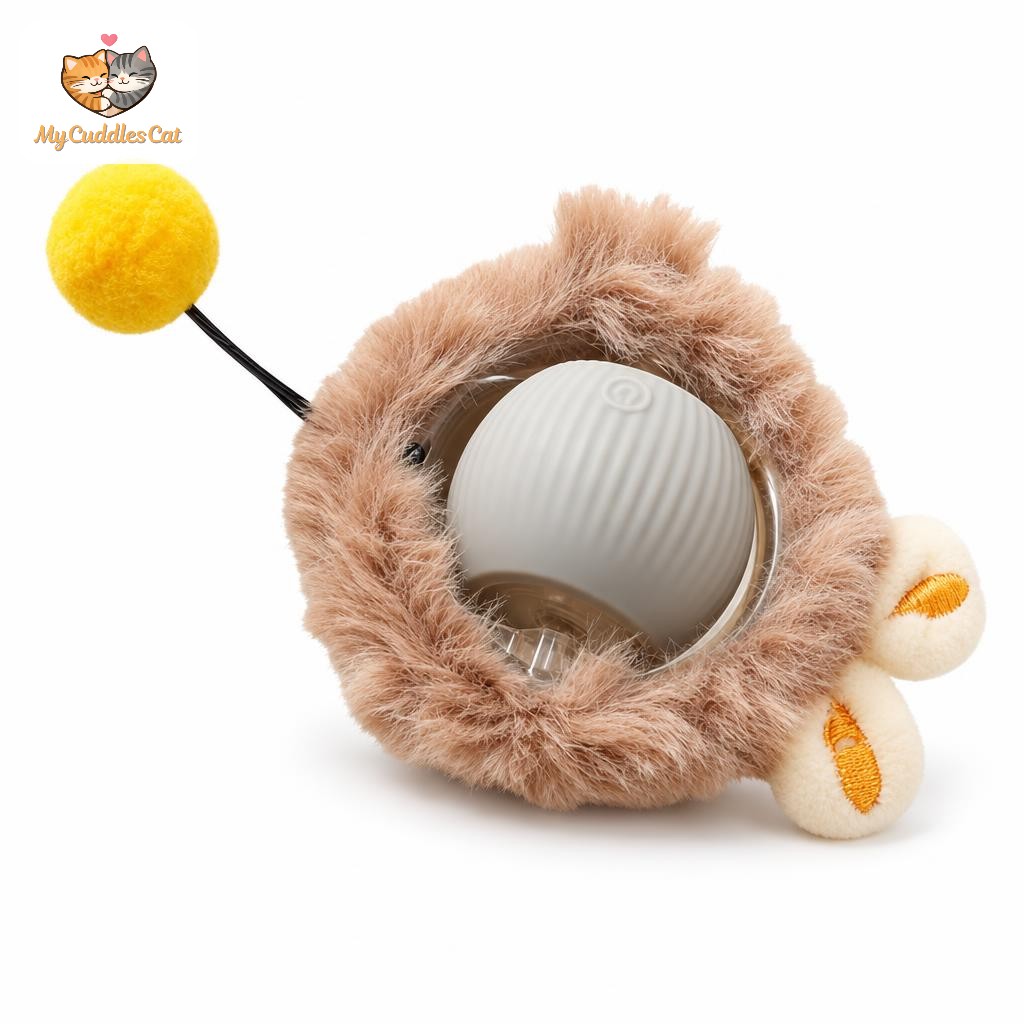
- For solo chase: the Orbit Chaser starts rolling when your cat taps it, runs for about 10 seconds and then waits for the next pounce. It has quick and slow modes and recharges by USB, with about 3 hours of play per charge. It is not for heavy chewers.
- For wrestlers: the Catnip Kicker Toys 3-Pack is three plush kickers about 7.9 inches long, filled with catnip and crinkle paper.
- For ambushers: the 3-Way Cat Tunnel has three connected tubes with a peek hole, a hanging ball and a feather wand, and folds flat. The supplier’s size guide suits kittens and cats up to about 12 pounds.
- For thinkers: the Cat Puzzle Feeder hides dry food under a clear cover and has an adjustable outlet for different kibble sizes.
- For batters with no charging: the LED Windmill Cat Toy sticks to a floor or wall with a suction cup and spins with every paw flick; it includes an LED ball and two catnip balls.
- For scratchers: the Accordion Cat Scratcher is a foldable cardboard scratcher with a rolling ball in the track.
If scratching is the real problem, read our guide on how to stop a cat scratching furniture, and browse everything in Toys and Enrichment.
Frequently asked questions
What is the best interactive cat toy to buy for an indoor cat that gets bored easily?
Look for a toy that moves on its own and stops between bursts, so your cat has something to stalk when you are busy. Our Orbit Chaser starts rolling when your cat taps it, runs for about 10 seconds, then waits. It has quick and slow modes and gives about 3 hours of play per charge.
How many toys does an indoor cat need?
Five or six of different types is plenty if you rotate them. Variety matters more than quantity.
What toys keep a cat busy while I am at work?
Self-moving chase toys, a tunnel or box to hide in, and a puzzle feeder with part of the daily kibble. Leave only toys that are safe unsupervised.
Why does my cat ignore its toys?
Usually because the toy does not move like prey, the cat has seen it too often, or play happens at the wrong time. Try a different type, rotate toys, and play before meals.
Are interactive toys better than wand toys?
They do different jobs. Interactive toys cover the hours you are out; wand play with you gives harder exercise and builds the bond.
How do I play with a senior cat?
Keep it short and low to the ground: drag a wand slowly, offer a kicker, and let the cat catch the toy often.
Is it normal for my cat to bite and kick toys hard?
Yes. Grabbing, biting and bunny-kicking is the final part of the hunting sequence, and a kicker toy is the right target for it.