
Best Cat Water Fountain: How to Choose One Your Cat Will Use
By the MCC team · 7 min read · Reviewed for accuracy
The best cat water fountain is the one your cat drinks from every day and you can clean in two minutes. Everything else, from the shape of the spout to the color of the light, matters less than those two things. This guide walks through how to choose a fountain by capacity, noise, material and cleaning effort, where to put it, and how to introduce it so a cautious cat does not ignore it.
Why a fountain instead of a bowl
Cats evolved from desert animals and tend to drink less than they should, especially on a dry-food diet. Many cats are also drawn to moving water: it is why some paw at a dripping tap or ignore a full bowl and drink from the shower floor. A fountain keeps water circulating, which keeps it cooler and stops the dusty film that forms on a still bowl after a few hours.
A fountain is not a medical device. If your cat suddenly drinks far more or far less than usual, that is a question for your vet, not a shopping problem. For a healthy cat, the goal is simple: make water more appealing so drinking happens more often.
How much water does a cat need?
A common rule of thumb from vets is about 4 ounces of water per 5 pounds of body weight per day, counting the moisture in food. A 10-pound cat on dry food therefore needs roughly a cup of water a day from the bowl; a cat on wet food needs much less. You do not need to measure it. What matters is that fresh water is always available and that your cat visits it without hesitation.
The five things that decide whether a fountain works
1. Capacity
For one or two cats, 2 liters (about 8 cups) is the practical size: enough that you are not refilling daily, small enough that the water does not sit for a week. Larger tanks sound convenient but encourage people to stretch the time between cleanings, which is when slime builds up. In a multi-cat home, two medium fountains in different rooms usually work better than one large one.
2. Noise
A fountain runs around the clock, so pump noise matters more than any other feature if it sits in a bedroom or a studio apartment. Look for a submerged pump and a design where water slides down a surface rather than falling into the tank. Most hum comes from a low water level, so a visible water-level window is a noise feature as much as a convenience.
3. Material
- Plastic is light, affordable and quiet, and it is what most fountains are made of. It needs regular scrubbing because scratches hold residue.
- Stainless steel resists scratches and is easy to keep clean, but it can amplify pump vibration.
- Ceramic is heavy and stable, stays cool, and chips if dropped.
Whichever you choose, the parts that touch water should come apart completely.
4. Cleaning effort
This is where most fountains fail in real life. Before you buy, count the parts and check that the lid, spout and pump all lift out without tools. If cleaning takes more than a couple of minutes, it will get skipped, and a dirty fountain is worse than a clean bowl.
5. Power
USB power is the most flexible: it runs from a wall adapter, and the cable is thin enough to tuck along a baseboard. Keep the cable away from chewers, and make sure the fountain sits on a waterproof mat or tray if your cat likes to splash.
Which cats benefit most
- Cats on an all-dry diet, because kibble contains very little moisture.
- Cats that already seek out running taps or drink from the shower.
- Senior cats, who often drink less and benefit from water that is easy to reach on every floor.
- Multi-cat homes, where a second water source reduces guarding by a confident cat.
A cat that eats mostly wet food and drinks happily from a bowl does not need a fountain. It is an upgrade for cats that under-drink, not a requirement for every home.
Fountain or bowl: a quick comparison
- Freshness: a fountain keeps water moving and cooler; a bowl goes stale within hours.
- Cleaning: a bowl takes seconds; a fountain takes a couple of minutes twice a week.
- Noise: a bowl is silent; a good fountain is a faint trickle.
- Cost: a bowl is cheaper up front; a fountain adds a small running cost for power.
- Power cuts: a bowl always works, so keep one filled as a backup even after your cat switches.
The honest summary is that a fountain is worth it when it changes behavior. Watch for a week: if your cat visits the water more often than before, it is doing its job.
Where to put a cat water fountain
Placement changes how much a cat drinks more than most people expect.
- Keep water away from the litter box. Cats avoid drinking near where they eliminate.
- Many cats also prefer water a few feet away from their food rather than right beside it.
- Choose a quiet spot with a clear view of the room. A cat with its back to a busy doorway drinks quickly and leaves.
- In a multi-level home, put water on each floor your cat uses.
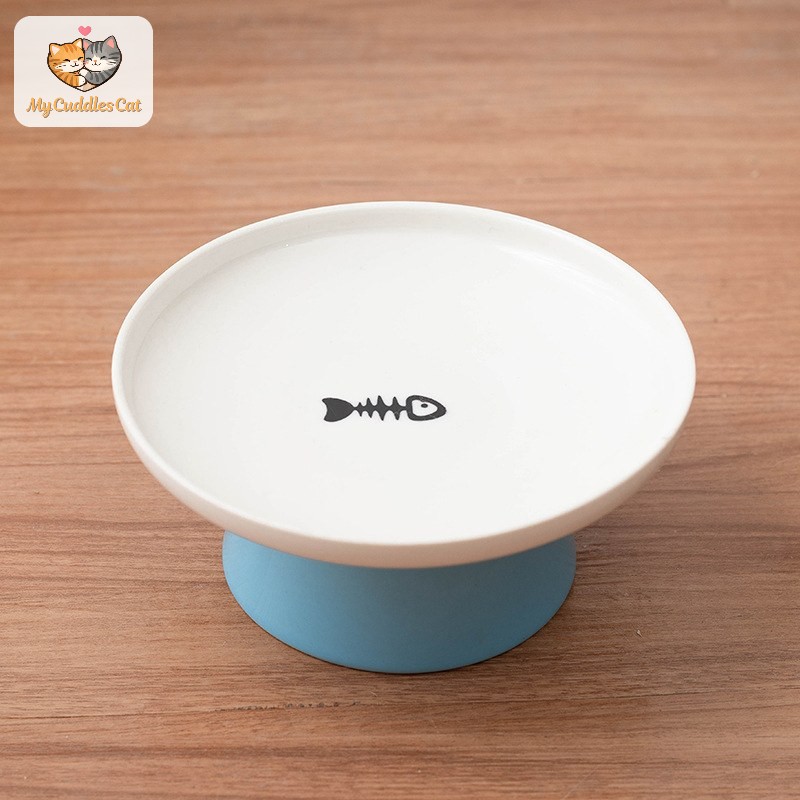
If you feed from a raised dish such as the High-Rise Ceramic Cat Dish, set the fountain on the other side of the feeding area so crumbs do not end up in the water.
How to introduce a fountain to a hesitant cat
- Day 1 to 2: set the fountain next to the old bowl, switched off, so it is just a new bowl.
- Day 3 to 4: switch it on at the lowest flow while you are home. Leave the old bowl in place.
- Day 5 onward: once you see your cat drinking from it, move the old bowl to another room rather than removing it outright.
Most cats investigate within a day. A few take a week. Do not hold a cat at the fountain or dab water on its nose; let curiosity do the work.
Cleaning schedule that keeps it safe
- Every day: top up with fresh water and wipe the drinking surface.
- Twice a week: empty it, rinse every part, and scrub with a soft brush and mild dish soap.
- Once a month: take the pump apart as far as the manual allows and clear the intake, where hair and mineral scale collect.
Hard water leaves white scale; a short soak in diluted white vinegar followed by a thorough rinse removes it. For a full routine across bowls, beds and toys, see our guide to keeping cat gear clean.
Common mistakes
- Buying for looks and discovering the pump is sealed inside a part you cannot open.
- Letting the level drop until the pump runs dry, which is the main cause of noise and early pump failure.
- Placing it beside the litter box because that is where the outlet is.
- Removing every other water source on day one.
Our pick
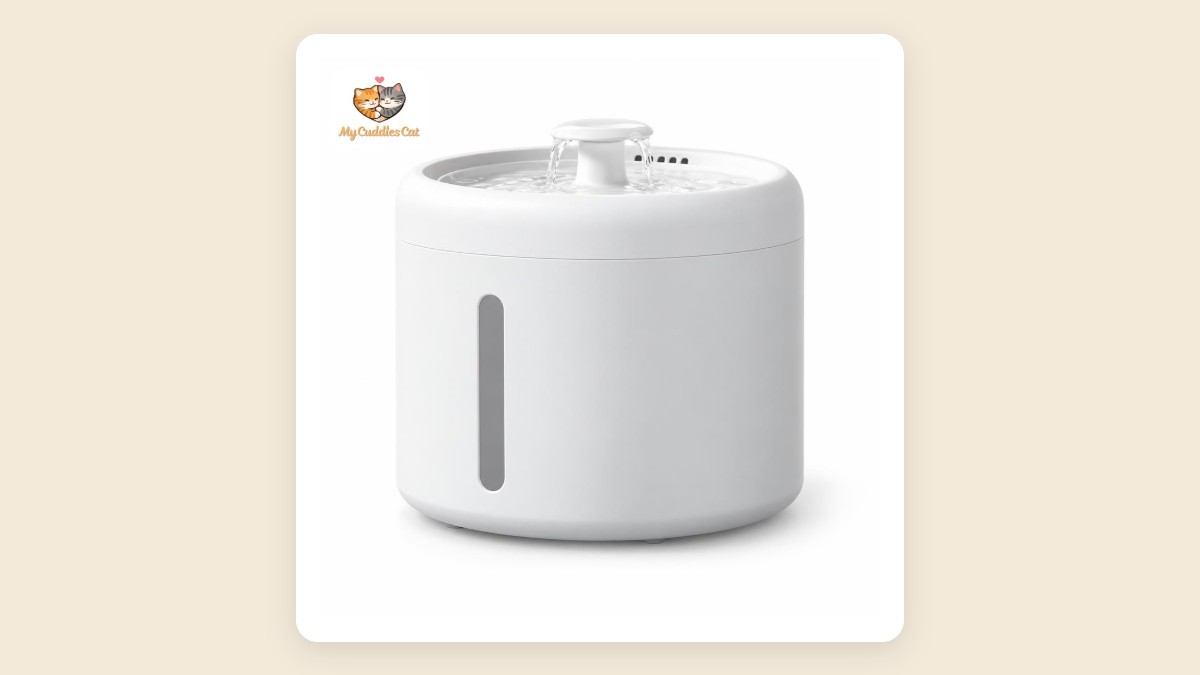
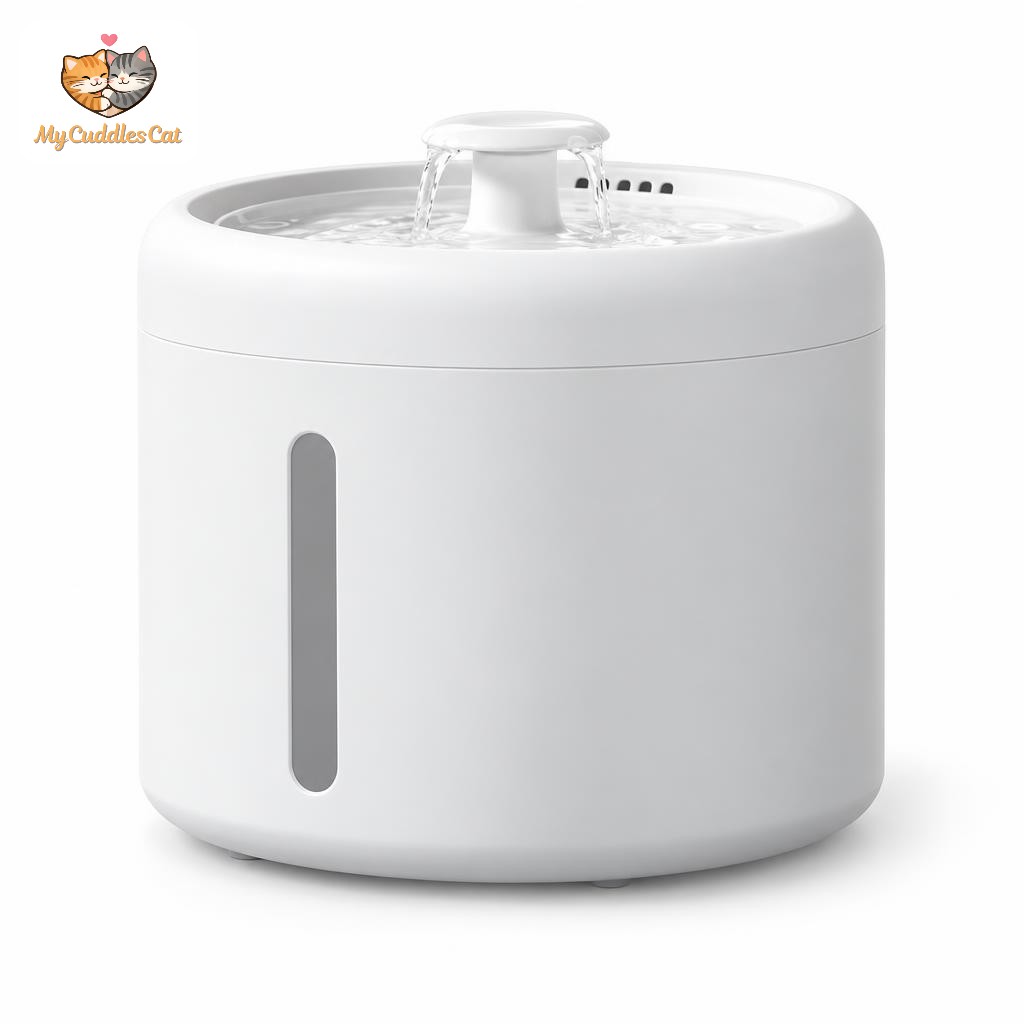
The Fresh Flow Water Fountain is the one we stock because it matches the checklist above: about 2 liters (8 cups), a quiet USB-powered pump, a water-level window so you can see when to top up, and a lid, spout and pump that lift out for a rinse. The round body is about 6.5 inches across, so it fits a corner without taking over the kitchen floor.
For cats that eat too fast as well as drink too little, pair it with the Slow-Feast Maze Bowl, and if you are away during the day, an automatic cat feeder keeps meals on schedule. Browse everything in Feeding and Water.
Frequently asked questions
Are cat water fountains worth it?
For most cats, yes. Moving water is more appealing than still water, so many cats drink more often, and the water stays fresher between refills. The condition is that you clean it on schedule.
How often should I clean a cat water fountain?
Rinse and scrub all parts about twice a week and clean the pump once a month. In a multi-cat home or with hard water, clean more often.
Do cat fountains use a lot of electricity?
No. Small fountain pumps draw very little power, similar to a phone charger left plugged in.
Can I leave a cat fountain on all the time?
Yes, they are designed to run continuously. Keep the water above the minimum line so the pump never runs dry.
Why won’t my cat use the fountain?
Usually it is placement or noise. Move it away from food and litter, check the water level, and leave the old bowl nearby for another week.
Is a fountain better than a bowl for kittens?
Either works. Choose a fountain with a low, wide drinking surface, and keep a shallow bowl available while the kitten learns.