
How to Get a Cat Into a Carrier Without a Fight
By the MCC team · 7 min read · Reviewed for accuracy
The easiest way to get a cat into a carrier is to make the carrier a normal piece of furniture long before you need it, so the cat walks in by choice. When there is no time for that, and the appointment is in an hour, the calmest method is to load hind legs first into an upright carrier, or to use a top opening. This guide covers both: the training plan that removes the fight for good, and the emergency method for today.
Why cats fight the carrier
A cat is not being difficult. From its point of view the carrier appears twice a year, smells of nothing familiar, and every time it has gone inside, something unpleasant followed: a car, a clinic, a stranger. Cats learn fast from bad experiences. The fix is to change what the carrier predicts.
If you have to leave in the next hour
- Stay matter-of-fact. Cats read tension, so prepare everything first and fetch the cat last.
- Close the doors to the room so there is nowhere to bolt, and block the space under the bed or sofa.
- Stand a front-opening carrier on its end, door facing the ceiling, against a wall so it cannot tip.
- Pick your cat up with one hand under the chest and one supporting the hindquarters, and lower it in hind legs first. Gravity does the work, and the cat cannot brace all four feet on the doorway.
- Close the door, lower the carrier gently to level, and cover it with a light towel.
If your carrier opens at the top, use that instead: lower the cat in and close it. For a cat that is frightened, wrap it loosely in a towel first, with the head out, and lower the whole bundle in. Never chase a cat around the house, pull it out from a hiding place by the legs, or tip it in head first.
The two-week plan that ends the fight
You are teaching one idea: good things happen in the carrier.
Days 1 to 3: make it furniture
Leave the carrier out in a room your cat uses, door open or removed, with a familiar blanket or a worn T-shirt inside. Ignore it. Let your cat sniff and walk past.
Days 4 to 6: treats near, then inside
Drop treats beside the carrier, then at the entrance, then just inside. Feed regular meals a few feet away and move the bowl closer each day until it is inside the door.
Days 7 to 9: all the way in
Place treats or the food bowl at the back. Many cats start napping in the carrier at this stage. If yours does, you are most of the way there.
Days 10 to 12: close the door
While your cat is eating inside, close the door for a few seconds and open it before the meal ends. Build up to a minute, then a few minutes, with you in the room.
Days 13 to 14: lift and carry
Close the door, lift the carrier, walk to another room, set it down, open the door and give a treat. Then try a five-minute car ride that ends back at home.
Go at your cat’s pace. If it hesitates, drop back a step for a day. Ten calm seconds are worth more than one forced minute.
Choose a carrier that makes loading easier
The carrier itself decides how hard this is.
- A wide front opening or a top opening beats a small door every time.
- A firm base stops the floor sagging under the cat, which many cats find alarming.
- Mesh on several sides lets the cat see out and lets you see in.
- A removable pad means you can swap in a blanket that already smells of home.
- Size: your cat should be able to stand, turn and lie down, but not slide around.
Our guide to choosing the best cat carrier goes through hard and soft carriers, sizing and car safety in detail.
On the day
- Feed a small meal a few hours before, not just before. A full stomach and a car do not mix.
- Play for ten minutes first to take the edge off.
- Put a towel or absorbent pad under the blanket in case of accidents.
- Carry the carrier with both hands, level and close to your body. Swinging it by the handle is the cat equivalent of turbulence.
- In the car, strap the carrier in on the back seat or set it on the floor behind a front seat. Keep the radio low and the temperature comfortable.
- At the clinic, keep the carrier off the floor and away from dogs, and leave the towel over it.
Coming home
Open the carrier and let your cat leave in its own time. Offer a treat, then leave the carrier out for a few days rather than putting it away at once, so the last memory of it is a quiet one. In a multi-cat home, the returning cat may smell of the clinic and get a cool reception; keeping it in a separate room for an hour or two helps.
Special cases
- Kittens learn fastest. Make the carrier part of play from the first week and you may never have a problem.
- Senior and arthritic cats may find being lifted painful. Use a carrier with a low entry and let them walk in, or lift with full support under the chest and hips.
- Very fearful cats may need more than training. Ask your vet about calming options before the next visit; do not give any medication without veterinary advice.
- Two cats should travel in two carriers. Stress can turn friends into opponents in a small space.
- A cat too heavy to carry comfortably is a good candidate for a stroller, which takes the weight off your arms.
Mistakes that make next time harder
- Bringing the carrier out only on vet days.
- Storing it in a garage or attic, where it picks up strange smells.
- Forcing the cat in head first while it braces against the doorway.
- Shouting, rushing or cornering the cat.
- Skipping the practice once things improve. A treat in the carrier once a week keeps the habit alive.
Our picks
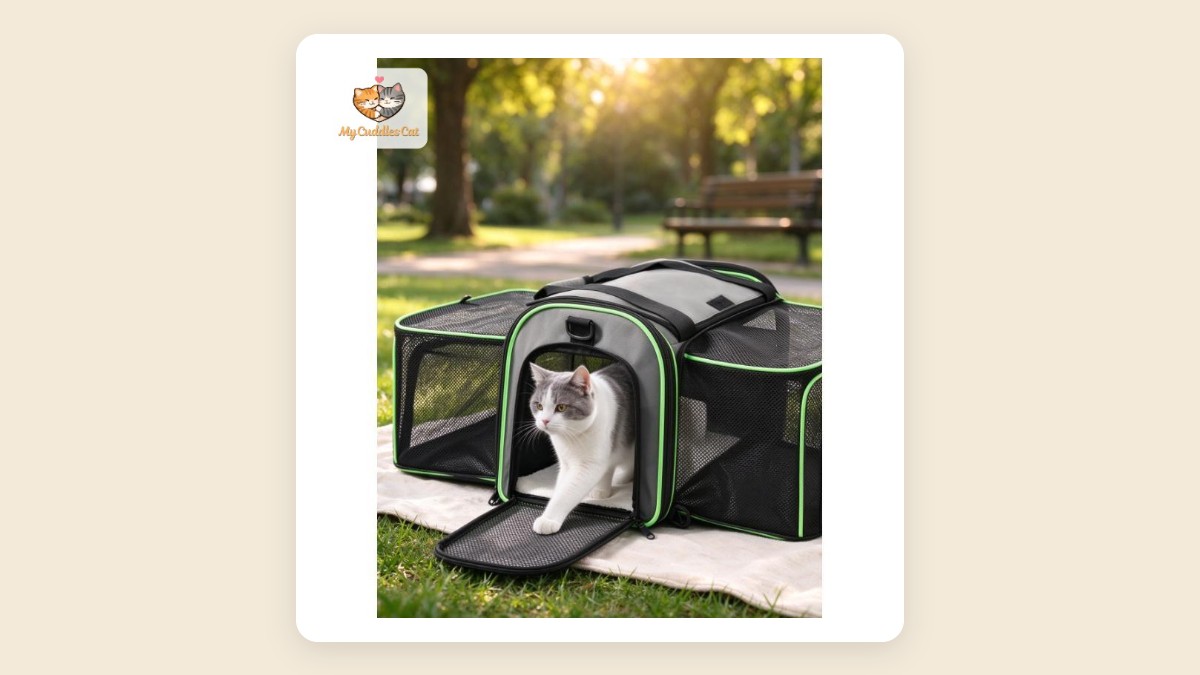
The Expandable Cat Carrier is a soft-sided carrier measuring 20.5 x 13.4 x 13.4 inches for pets up to 22 pounds, with mesh panels all round, a removable fleece pad, a car seat-belt strap and two zip-out side extensions that give your cat more room once you arrive. For cats that are heavy to carry, the Cat Stroller has a zip-closed cabin with mesh windows and holds up to 35 pounds, and the Pet Stroller with Detachable Carrier has a cabin that lifts off the frame for the car. See everything in Carriers and Travel.
Frequently asked questions
How do I get a scared cat into a carrier?
Stand the carrier on its end and lower the cat in hind legs first, or wrap the cat loosely in a towel and lower it through a top opening. Stay calm and close the room first.
How long does carrier training take?
Most cats accept the carrier within one to two weeks of daily, short sessions. Fearful cats can take longer.
Should I leave the carrier out all the time?
Yes. A carrier that is always available with a blanket inside becomes a resting spot instead of a warning sign.
Is it better to put a cat in a carrier head first or tail first?
Tail first. A cat lowered in hind legs first cannot brace its front feet against the opening.
Can I use treats or catnip in the carrier?
Yes. Treats, meals and, for cats that respond to it, a little catnip all help build a good association.
What if my cat pees in the carrier?
It is usually stress. Line the carrier with an absorbent pad under the blanket, wash everything afterwards, and keep training between trips.